


In perhaps my favorite piece of writing from my friend and AoPS founder, Richard Rusczyk, he explains that “There are many paths to strong problem solving skills. Mathematics is the shortest.”
He’s probably right, but there is another strong contender: puzzles. One of the best ways to encourage students to actually use problem-solving tools is to give them puzzles.
Recently, solving a particular puzzle solidified this idea for me. It came at a time when a colleague was trying to identify the problem-solving tools we consider most important in Beast Academy.
The list includes classics from Polya, such as:
- understand the problem
- organize your work
- guess and check
- find patterns
- work backwards
- solve a simpler problem
- use a drawing or model
- eliminate choices
During a Wednesday morning puzzle-solving session, I realized that I had used almost every one of these tools to solve a single puzzle.
The puzzle is called Scurry, and it is part of the recently launched daily puzzle suite from Beast Academy. To help you understand the problem, I encourage you to take a moment to try the tutorial puzzles here.
The mechanic is simple: place a bug on any square in a 5-by-5 grid. Any bug in one of the eight neighboring squares then scurries one square away. Below is a worked sample puzzle. Watch how each newly-placed bug pushes the others away.
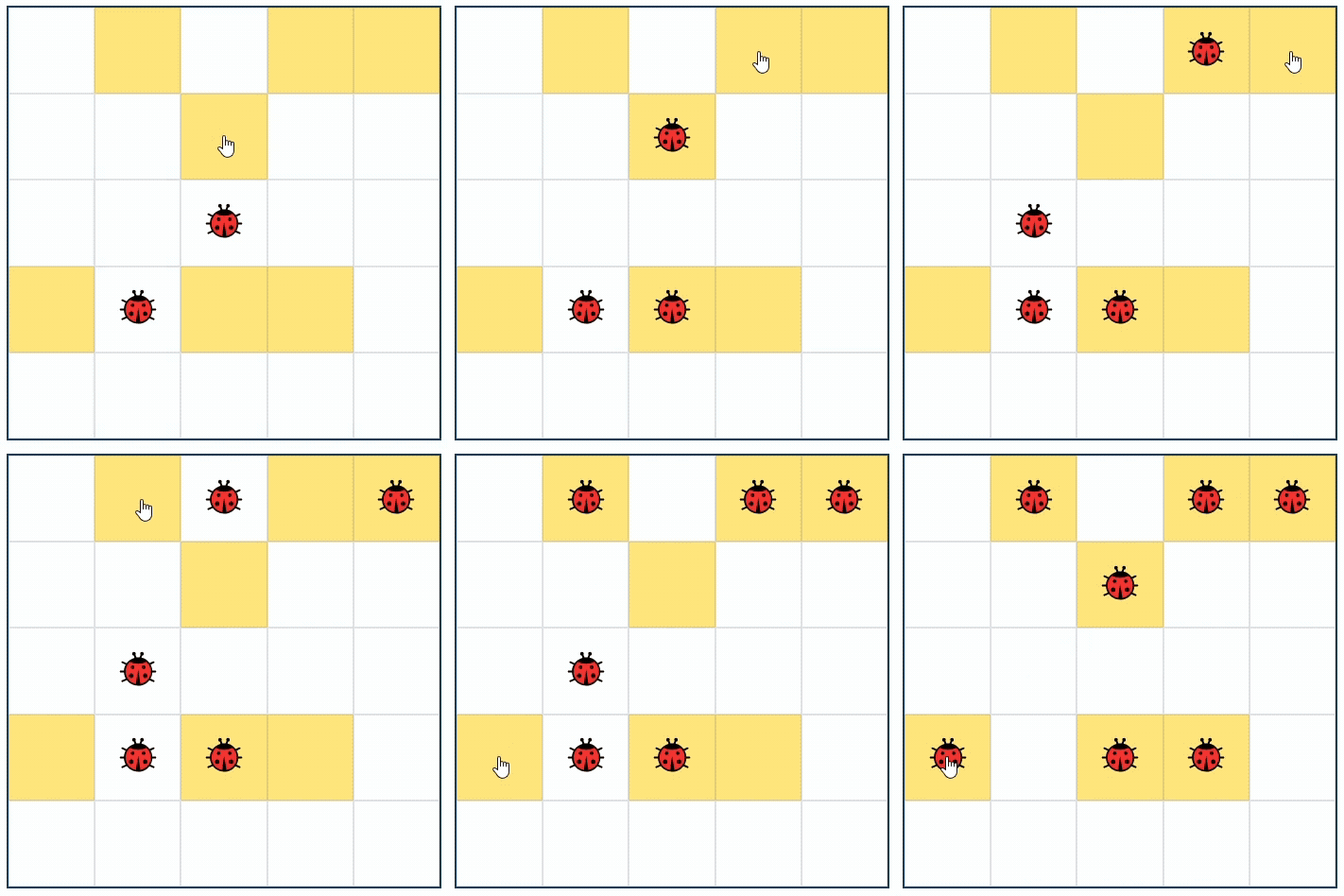
The goal, as you might have guessed, is to “scurry” all of the bugs into the yellow target squares.
Below is the start of the puzzle I was working on that day. It requires five carefully placed bugs to complete:
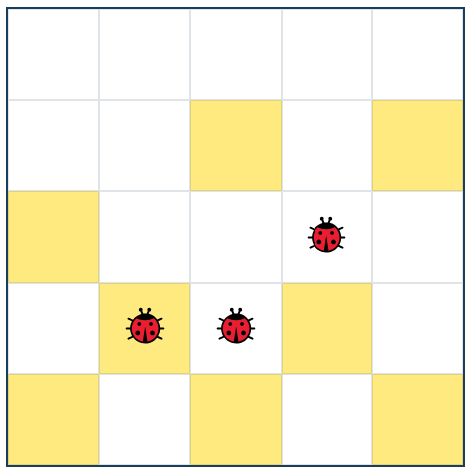
Your first instinct is probably that this puzzle is too hard for the uninitiated. You’re right!
But if I’m going to write about a puzzle that uses a half-dozen problem-solving tools, it needs to be a tough one. So let’s open our problem-solving toolkit and get to work.
Working backwards is perhaps the most important and least obvious tool we can use here.
Consider the solved puzzle below. Which bug(s) could have been placed last?
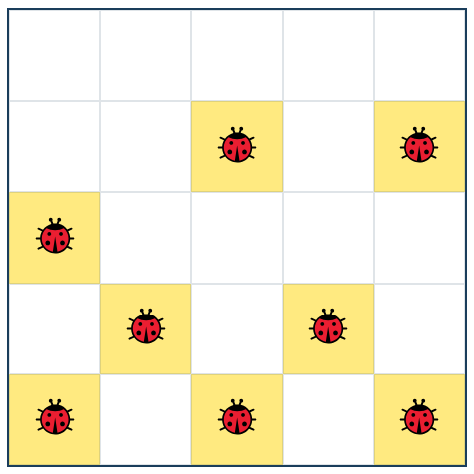
Placing the last bug on any crossed-out square below will scurry at least one neighboring bug from its target square. So the final bug must be placed on one of the two target squares in row 2.
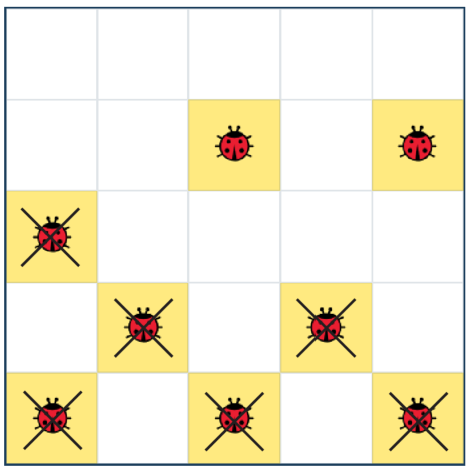
Recognizing patterns gives us a key insight. The pattern where a bug has a target on either side can be completed by placing a bug on either target.
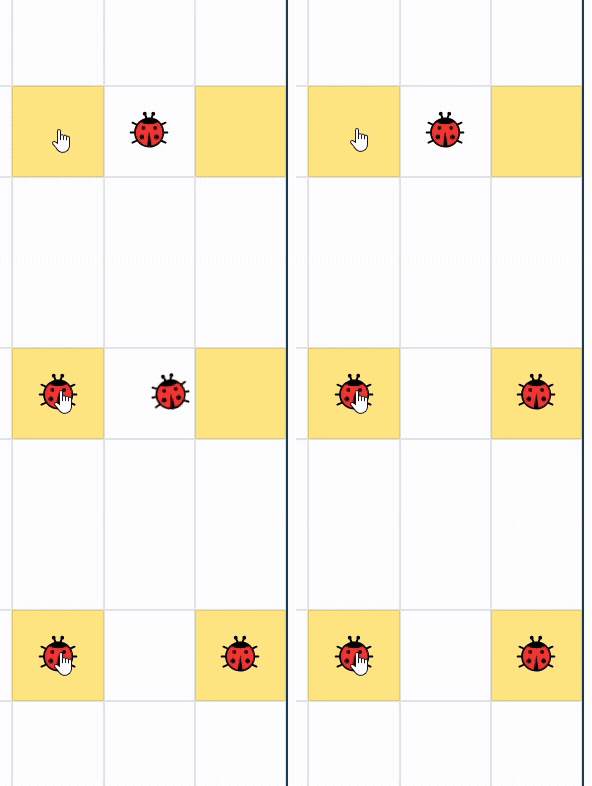
A bug placed on either target square in row 2 will scurry its neighbors. But only a bug between these two squares will get scurried onto a target. So before the last move, the board must look like this:
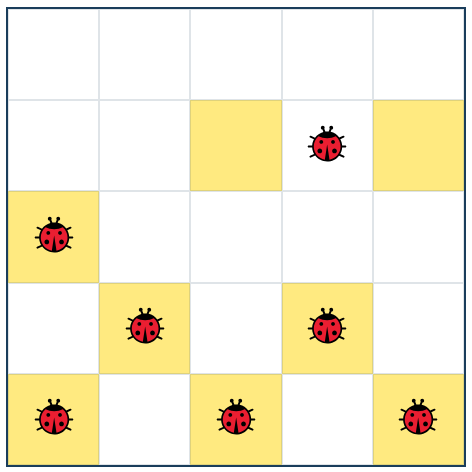
Now we have something to aim for—a (slightly) simpler problem. We can break out another tool: guess and check. We’re not placing bugs at random—we’re testing ideas and learning from the results.
For example, the following start feels tempting at first. If we need to get a bug between those two row-2 squares, why not get it there early? But as we try to populate those bottom rows with bugs, they keep pushing each other off the board or into useless squares.
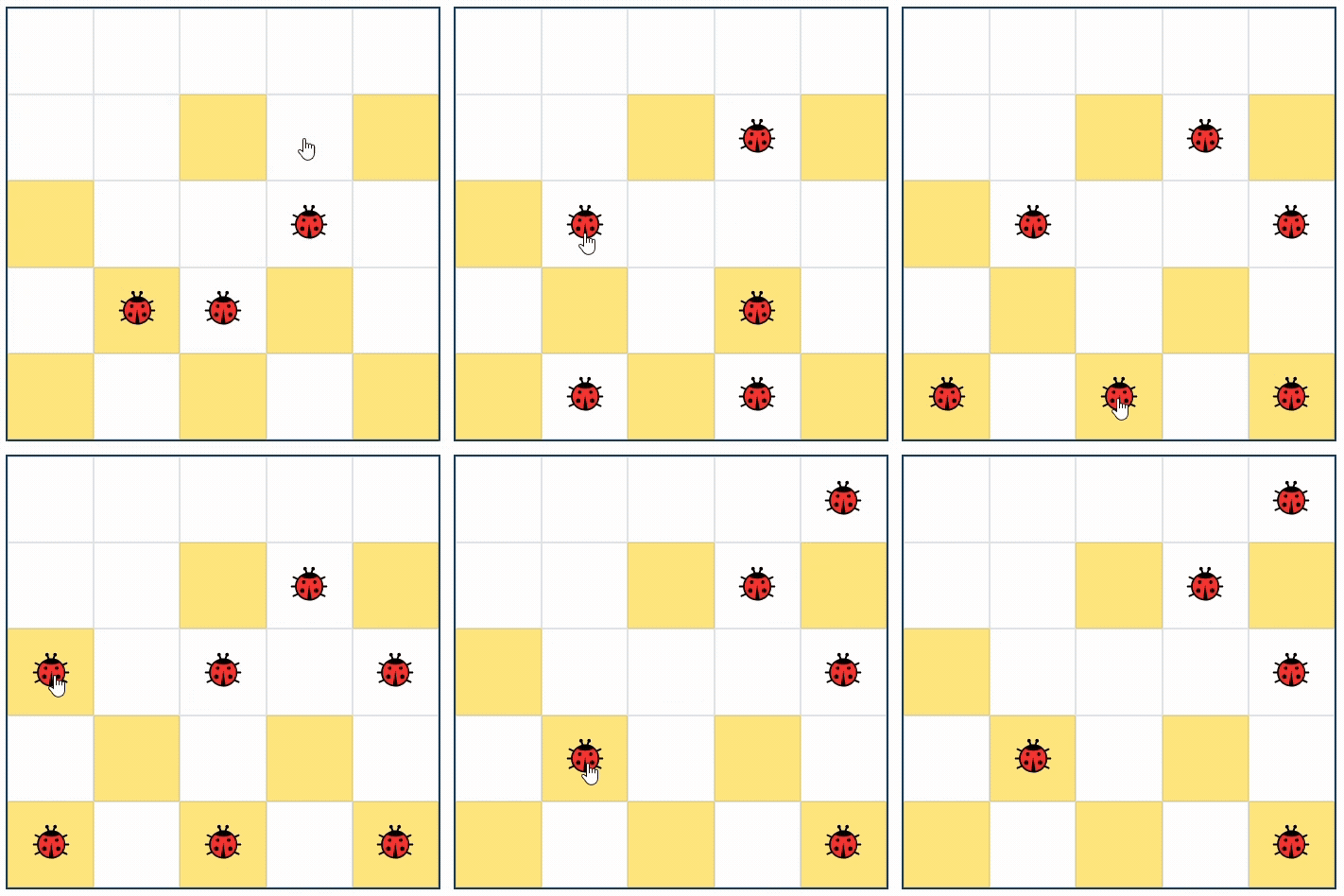
Our guess-and-check leads us to another insight—we can’t complete the bottom rows without help. What we really need is for that bug between the targets in row 2 to do something useful. What if we could use it to push bugs into those target squares in row 4? Like this:
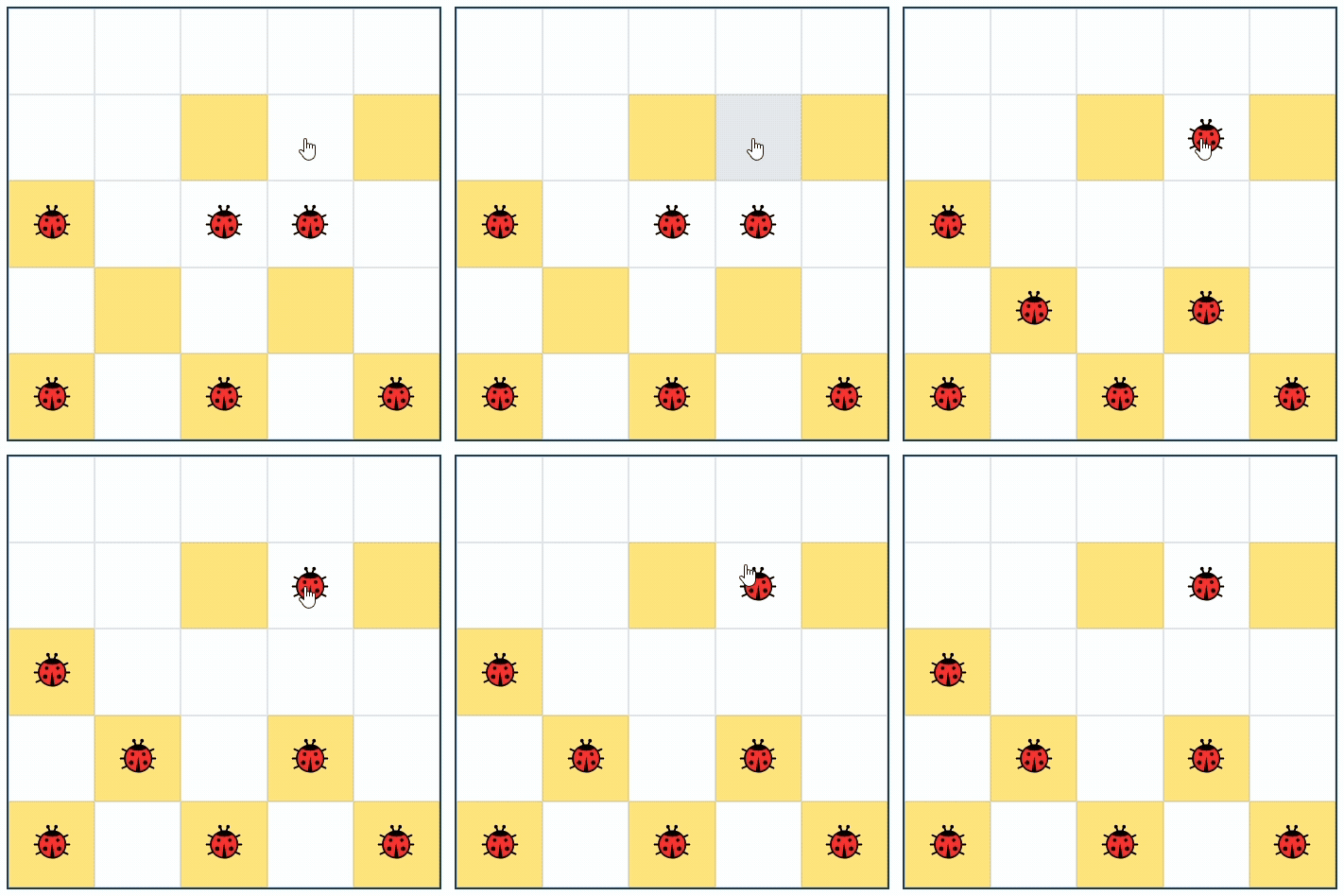
We’ve worked backwards again, and now we have an even simpler goal to shoot for. The arrangement before the last two bugs are placed must look like this:
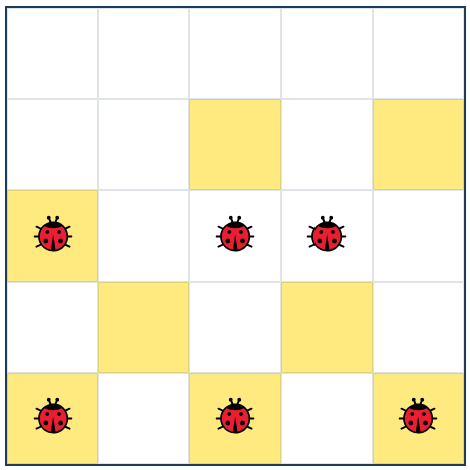
If we’ve organized our work, we’ve ruled out bad moves and positions—we’ve eliminated possibilities.
After using most of the tools in our kit and being aggravated by many misplaced bugs and surprising scurries, we find the strong first move below. Before scrolling farther, see if you can spot the two moves that help us get from the position below to the one above.
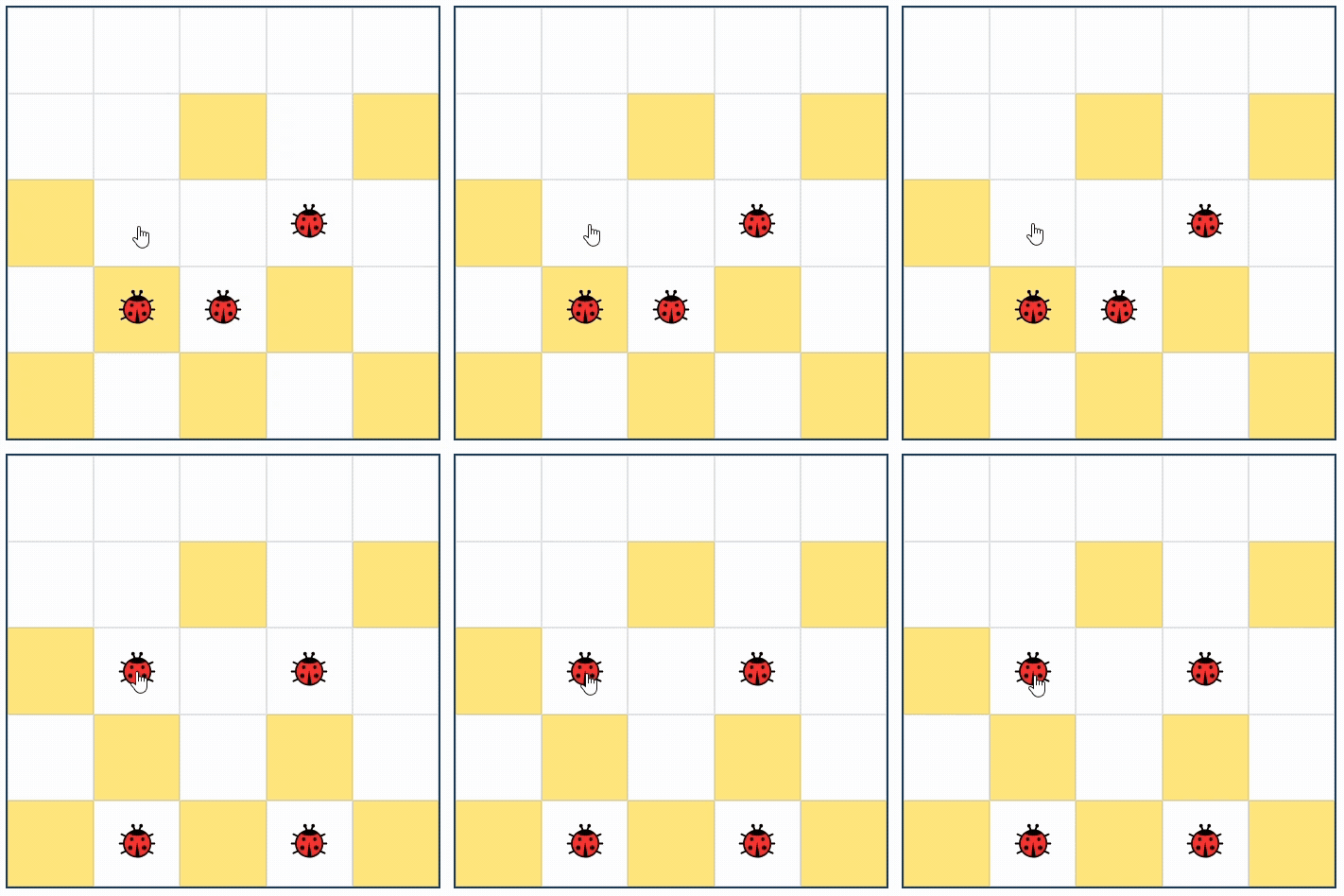
One carefully-placed bug fills all three targets in the bottom row, another creates the pattern we need in row 3, and we can finish the puzzle from there as planned.
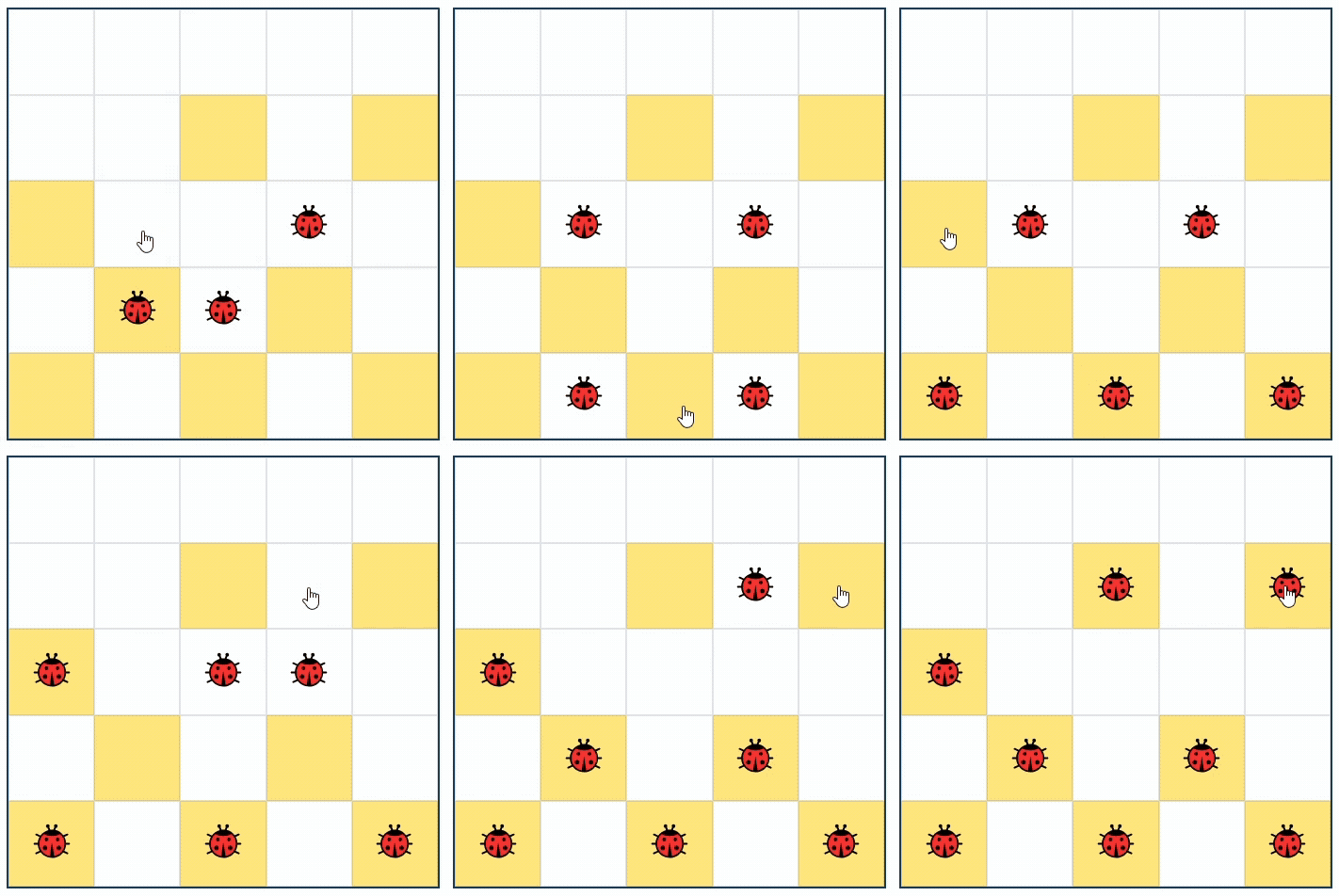
These moves aren’t obvious. But with practice, you can learn to spot them. And the result of a well-solved puzzle is satisfying in a way that makes you want to try the next one.
That’s what makes puzzles such a powerful teaching tool; they are among the most enjoyable ways to put problem-solving tools into practice.
So if you wonder whether your child is spending too much time in Beast Academy Puzzle Lab or on daily puzzles like the one above, know that they’re not just playing—they’re sharpening some of the tools that matter most.