


Knowing, Understanding, and Beyond
Part 1: Area of a Triangle
It’s a cliché to say that students should focus on understanding, not just knowing. But what exactly does ‘understanding’ mean? And is understanding enough? After all, students who have understanding can still freeze in unfamiliar situations. So what’s going on?
The issue is that we have created a false dichotomy. Knowing and understanding are not opposing categories, but rather two points on a broader spectrum of cognitive fluency.
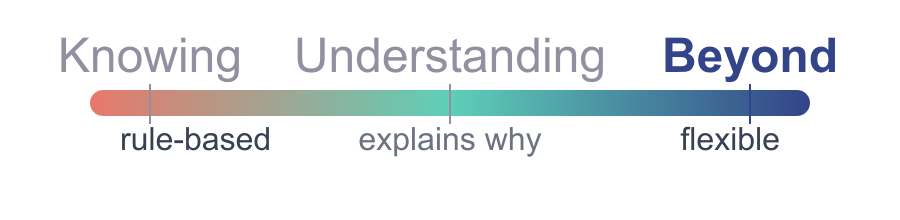
There are levels of competence beyond understanding. And these levels have a different feel to them entirely. Math becomes less like applying the ‘correct’ ideas in a narrow setting and becomes more like flexibly manipulating the problem space. You can bend constraints. You reinterpret metaphors. You can rearrange shapes, cut them apart, embed them in larger shapes. The focus shifts from ‘what am I allowed to do?’ to ‘what can I play with?’
So what does this kind of higher level of fluency look like in practice? Let’s look at a concrete example: finding the area of a triangle.
Knowing
At the ‘knowing’ level, you know the formula: A = ½ 𑛀 b 𑛀 h. That is, the area of a triangle is half the base times the height. As long as your triangle is clearly labeled with its base and height, we can apply the formula, no sweat. If someone gives you a worksheet with problems that has only those simple situations, you’ll crush it. But you probably can’t explain where the ½ comes from in the formula. Worse, if the triangle is tilted, or you aren’t sure what the base and height are, you’ll panic.

Understanding
At the ‘understanding’ level, you not only know the formula, A = ½ 𑛀 b 𑛀 h, but you have an instinct for why there is a ½ in the formula: a triangle takes up half of the rectangle it sits inside.
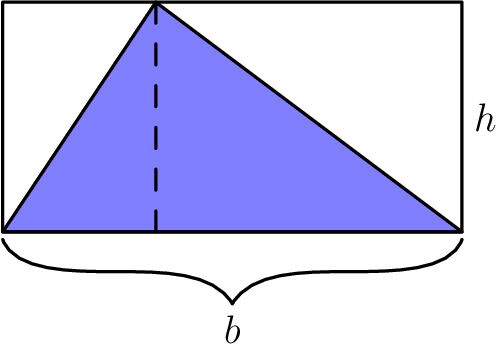
This helps you understand how to look for the base and height of triangles by drawing their bounding rectangles. But still, there are some questions that make you squirm.
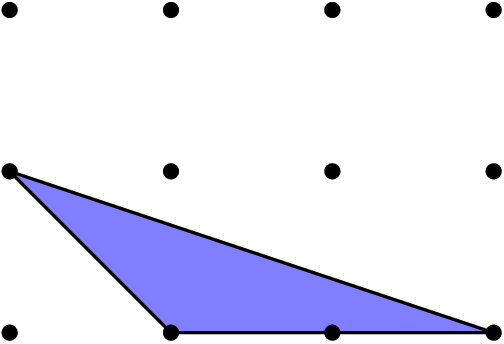
Your understanding is solid, but it is limited to a narrow configuration.
Beyond
The best way to experience the ‘beyond’ level of fluency is to see it in action. Here’s a problem where beyond-level skills shine:
Problem: A grid of equilateral triangles is drawn so that each small equilateral triangle has area 1. What is the area of the larger triangle below?
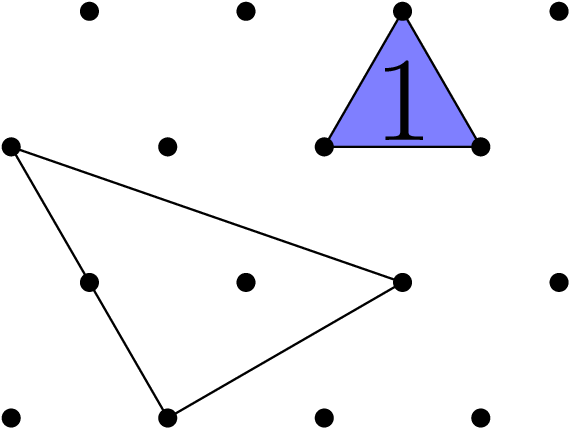
Go ahead and chew it over first if you like. Then continue on to see several beyond-level approaches.
What makes this problem hard? If you gave it a shot, you might have gotten stuck in a few different places. First, the triangle is tilted, which makes it harder to identify the base and the height. Even if you got past this wrinkle and noticed that the triangle is a right triangle, it seems like you still have to find values for the base and height to compute the triangle’s area. The issue is, the information we are given to work with doesn’t give us any lengths directly. Unless we are willing to get our hands dirty with messy algebra, we are stuck. We need the power of the beyond.
Beyond Solution 1:
The triangle we start out with is tilted, which makes it harder to understand. So we change our perspective by tilting the whole grid to straighten out our triangle:
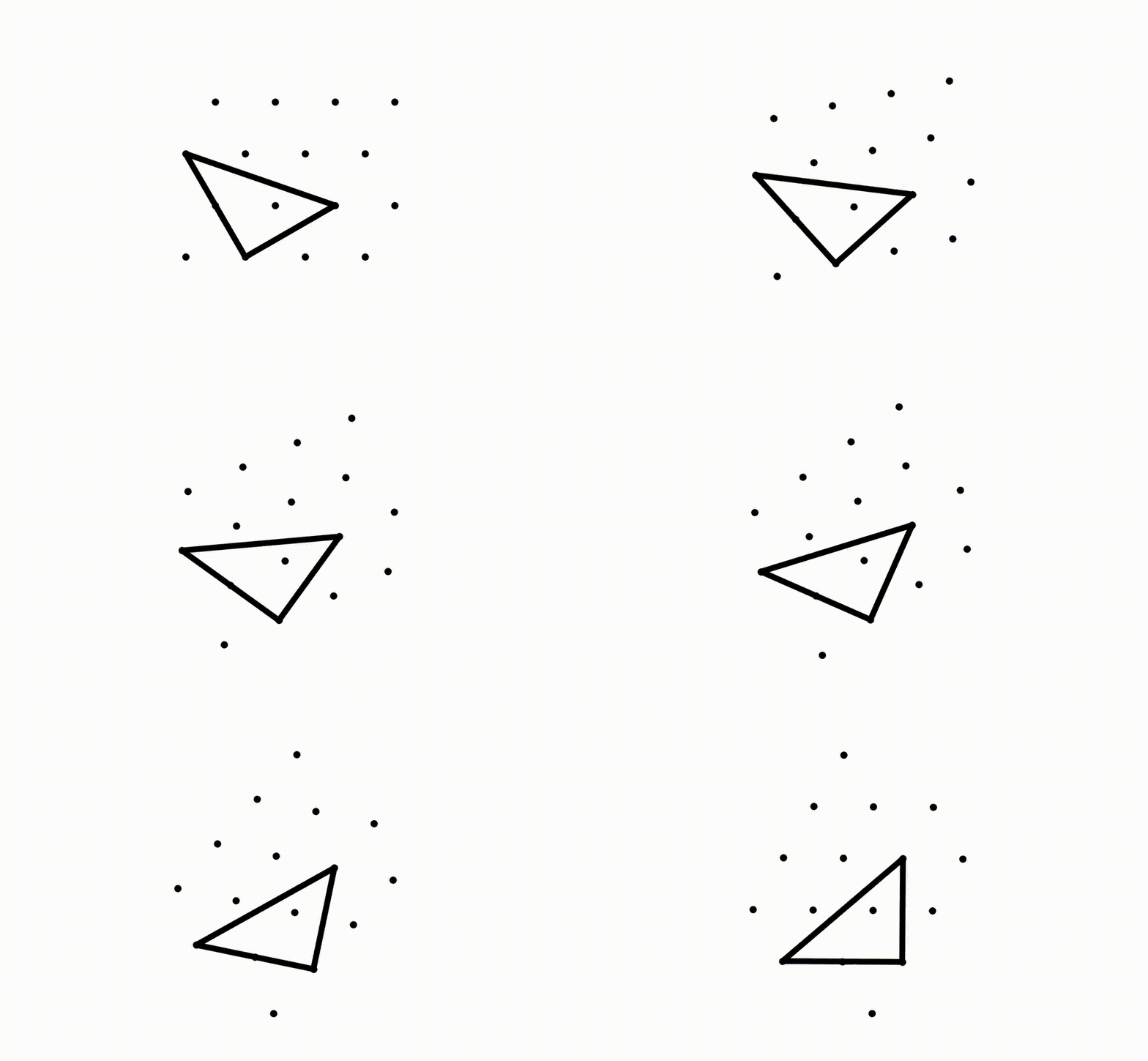
Now we can see that it is a right triangle, and the base and height are simple to spot. Rather than try to compute their values, we try to compare them to the given information. Let’s label the base of each small equilateral triangle b and the height h.
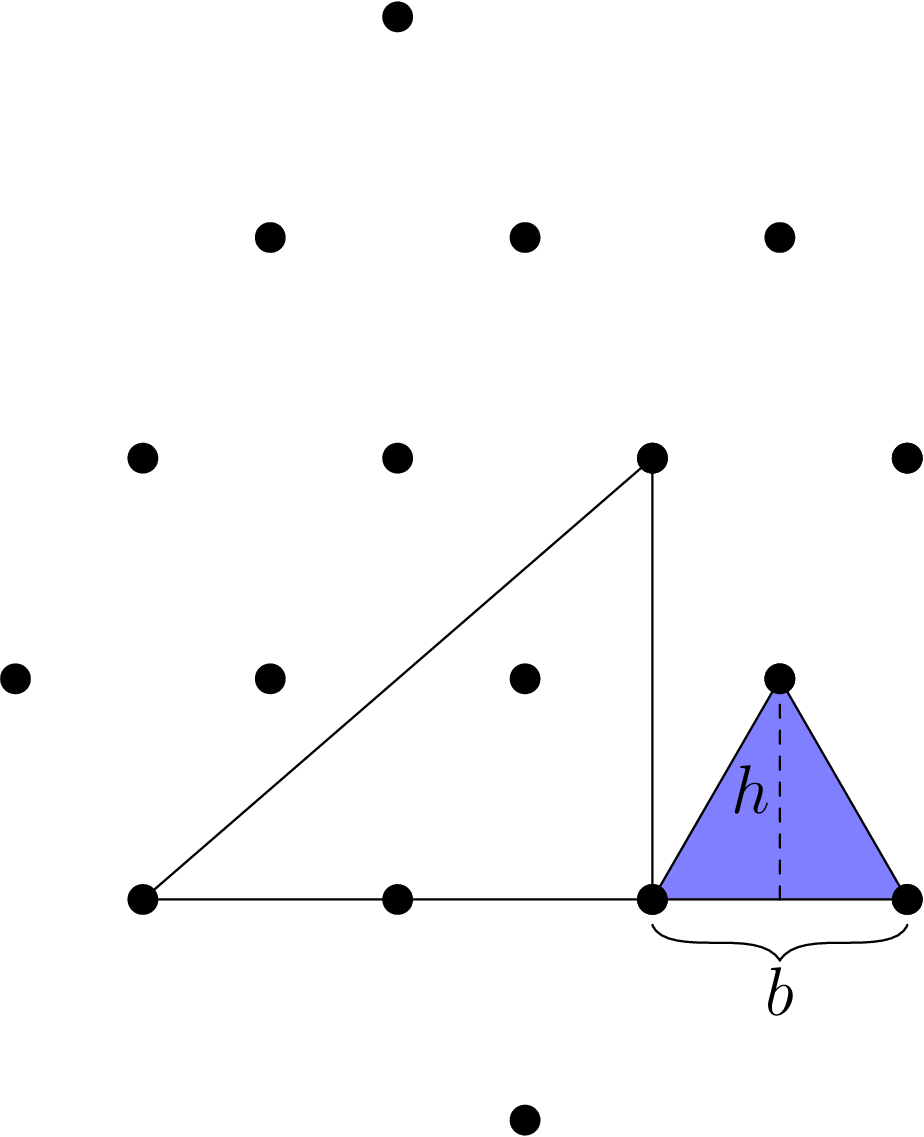
Aha, but the base and height of our right triangle is 2b and 2h!
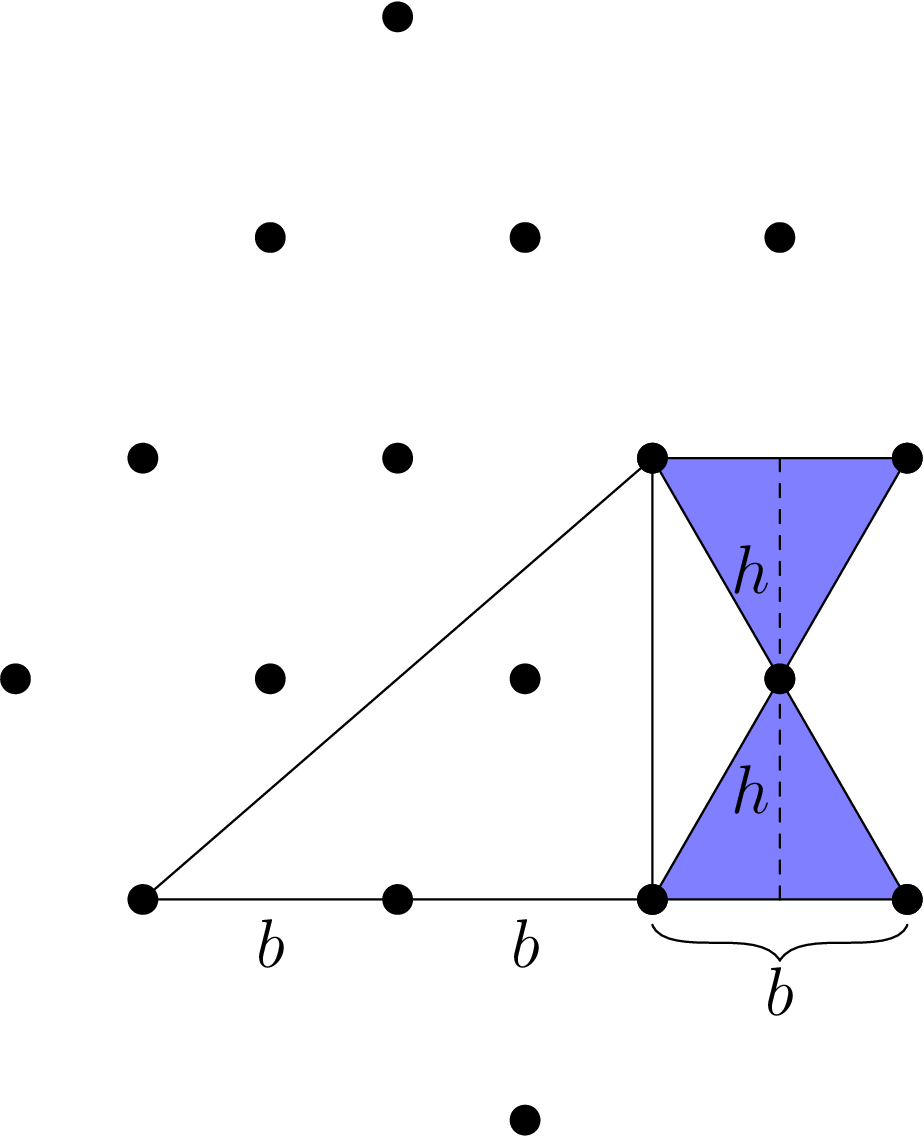
In other words, we double the base and double the height of the small equilateral triangle. This will double the area twice! Since the small equilateral triangle has area 1, our answer is 2 𑛀 2 𑛀 1 = 4.
Key insights: We know what matters and what doesn’t matter. The grid orientation doesn’t matter for area, so we rotated it to make things easier for ourselves. And more importantly, we never solved for b and h. We just used the idea of how doubling the base and doubling the height would affect the area.
Beyond Solution 2:
The triangle we’re given looks kinda funky, but all we need is its area. So we can mess with the triangle as long as its area stays the same. We should be on the hunt for equilateral triangles, since we know their area. What if we slide the rightmost point up and to the left one notch?
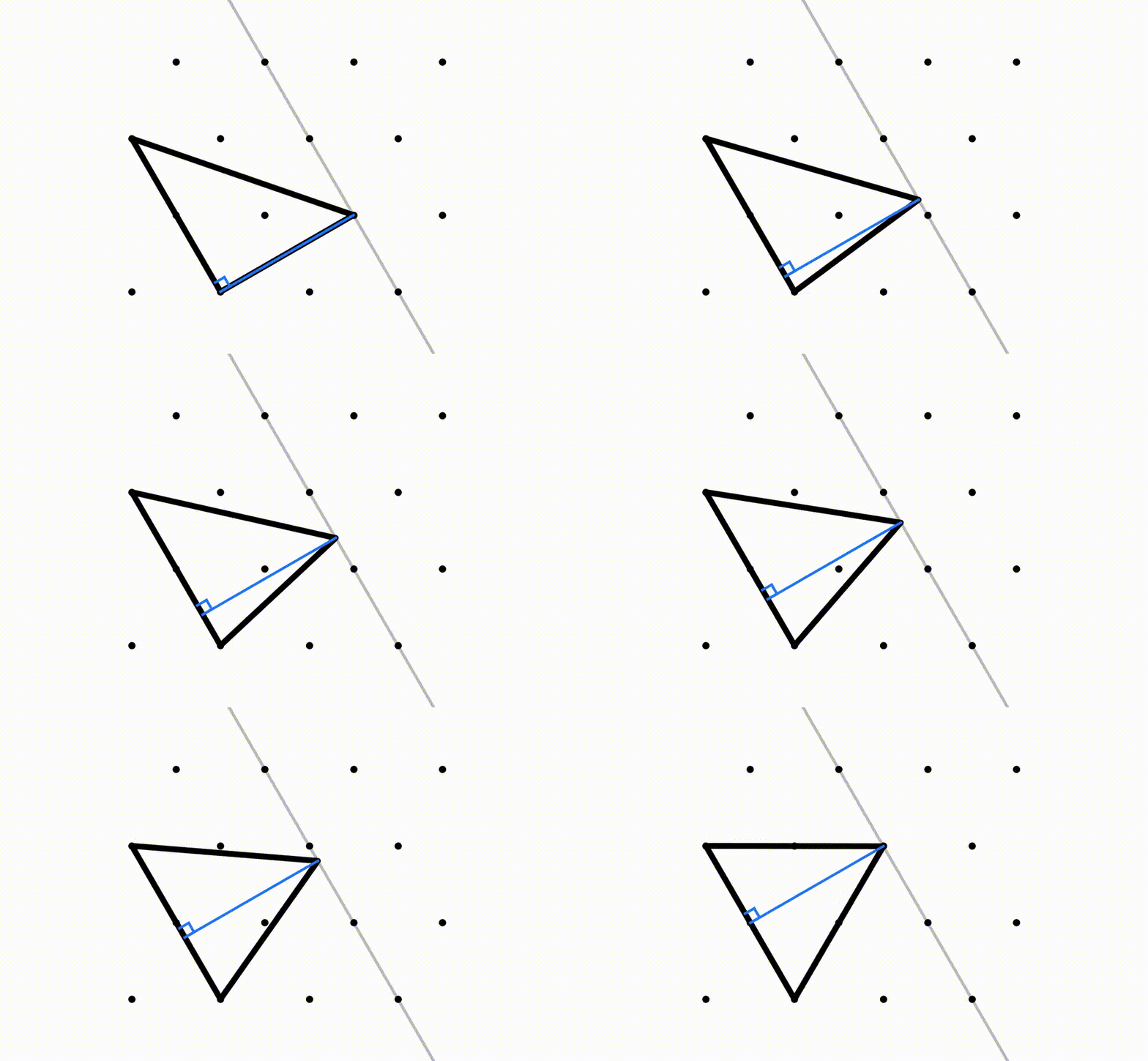
This slide won’t change the area, since we keep the same base and height throughout. But more importantly, we end up with a big equilateral triangle! We can then see that the big equilateral triangle decomposes into 4 little ones, each of area 1.

So the answer is 4.
Key insights: We know how to change the problem without changing the answer. The given triangle seemed clumsy, so we manipulated it into one we understood better without affecting the area.
Beyond Solution 3:
The starting triangle doesn’t line up nicely with the unit triangles in the grid. But since all we care about is area, we can use the classic Office suite of area tools—copy, paste, cut—to try to make the area more compatible with grid triangles. What if we first copy the original triangle, then make a box with the copy?

Then this box has twice the area in question. But more importantly, the box is easier to work with: we can see it consists of 6 equilateral triangles of area 1, and 2 rogue obtuse triangles, shaded below.
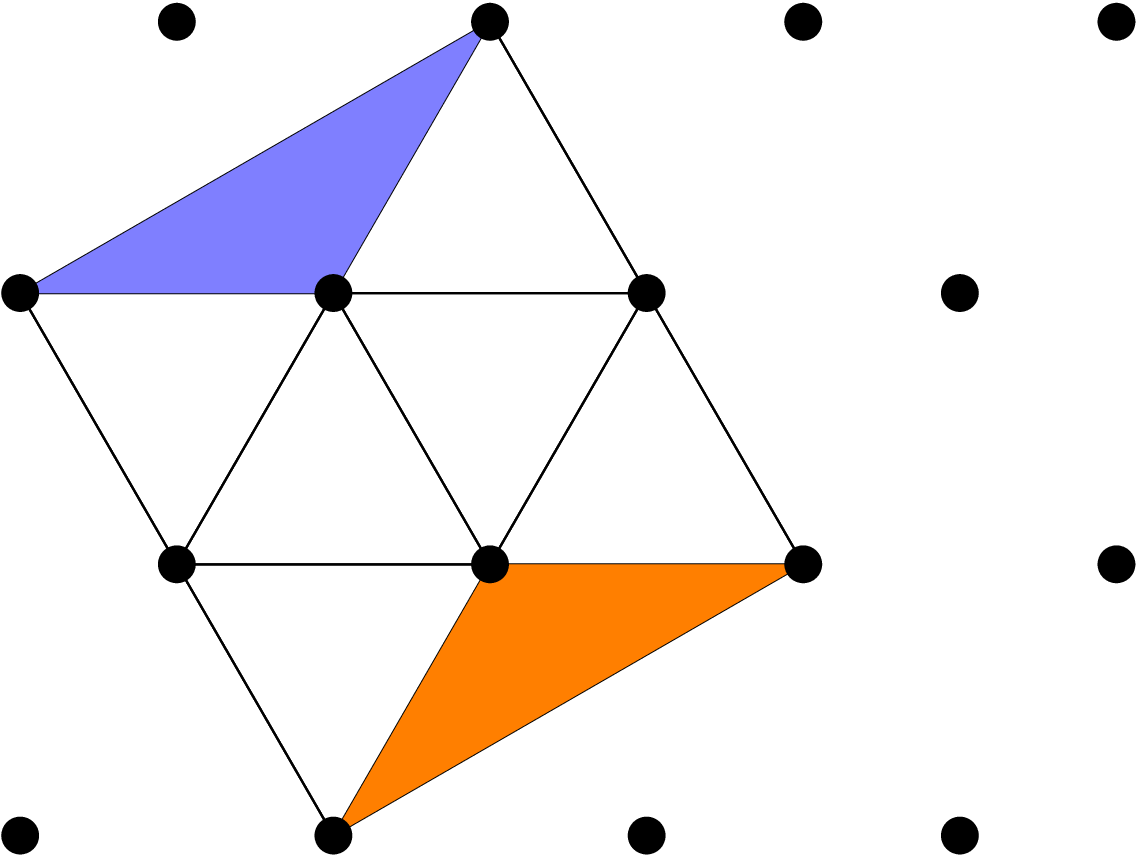
We’re almost there; we just have to figure out what to do with the rogue triangles. Let’s try cut and paste: what if we bring them together?
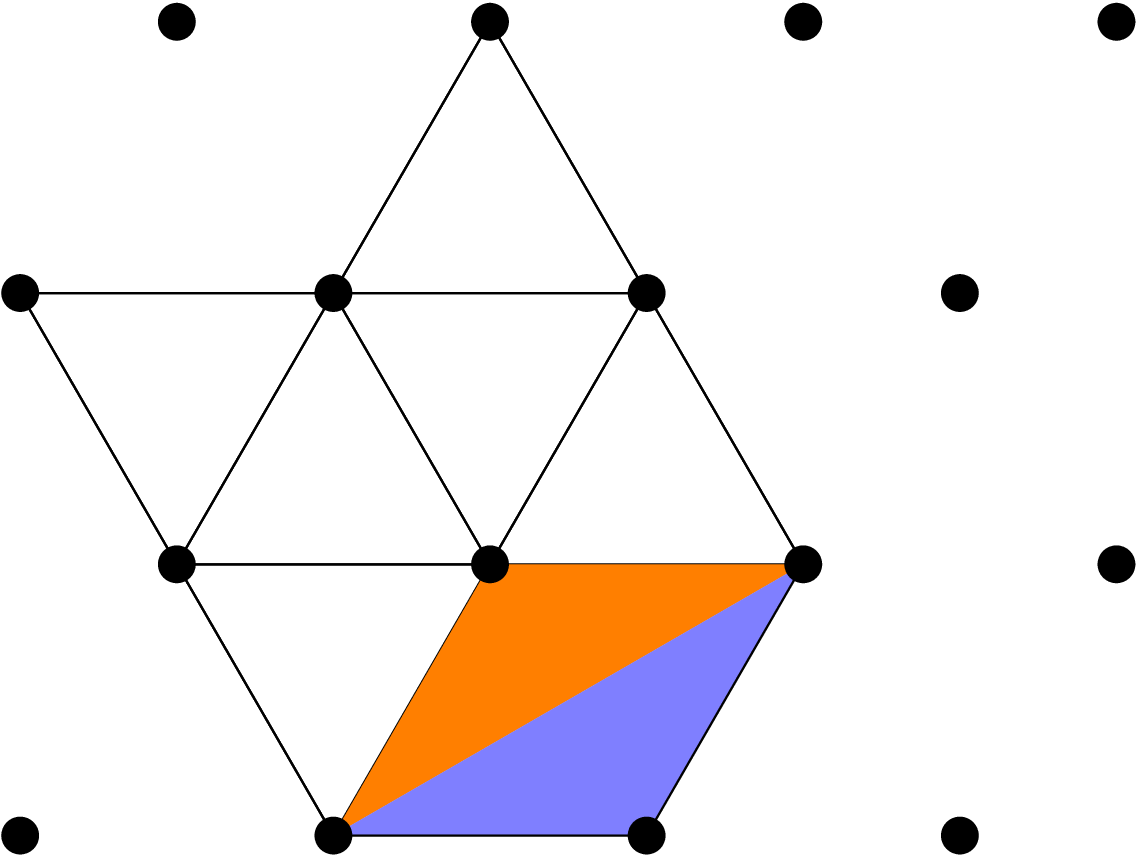
Then the final shape is 8 equilateral triangles!

Therefore, the area of the original triangle is half the area of this shape: ½ 𑛀 8 = 4.
Key insights: We know how to shape the problem into a different context that we understand. Rearranging bits of the area turned it into a shape that worked more nicely with our given data about small equilateral triangles. In fact, for this solution, we did not even use the concept of A = ½ 𑛀 b 𑛀 h at all!
How do the ‘beyond’ solutions feel? You use your web of knowledge and understanding to mold a problem into a familiar zone that you can reason about comfortably.
So what made the difference between knowing, understanding, and beyond for this case study? The fundamentals of area were always there, present in all three levels. What changed was your ability to see what could be moved, what could be ignored, and how those adjustments affected the answer. In problem solving, progress is not just learning new rules and their justifications. It is also about learning new ways to see what is possible.
Are you ready to go "beyond" with division? Read Part 2!
About the Author: Dr. Aaron Demby Jones is an educator, musician, and visual artist with a background in both mathematics and music. He spent several years at Art of Problem Solving as Curriculum Developer and Product Director, and has taught at Johns Hopkins CTY and HCSSiM. Learn more about his work at www.studiodemby.com.
The views expressed in this guest post are those of the author and do not necessarily represent those of Art of Problem Solving.