


The views expressed in this guest post are those of the author and do not necessarily represent those of Art of Problem Solving.
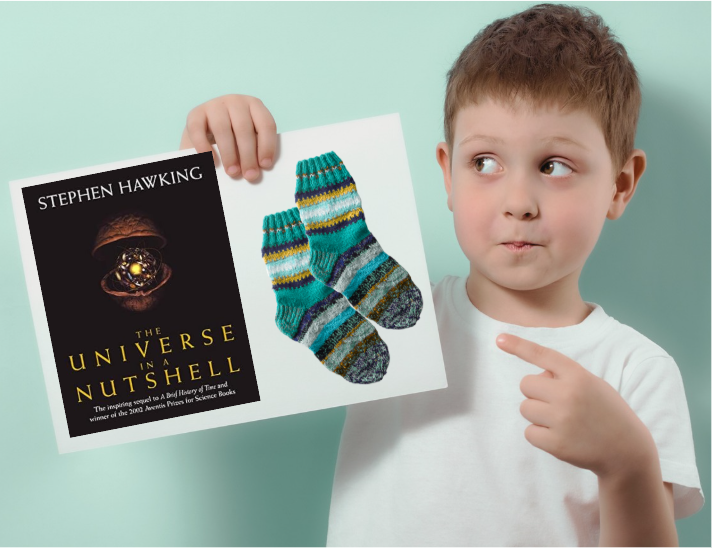
John's Story
Meet John, a bright nine-year-old who can explain nuclear fusion better than most adults. His favorite bedtime reading is Stephen Hawking’s The Universe in a Nutshell. Yet he struggles to memorize multiplication facts, writes slowly, and sometimes shuts down because his socks feel “scratchy.” On some days, he eagerly debates science theories; on others, he melts down when plans change unexpectedly. John describes his paradox best:
“Hard things are easy… and easy things are hard.”
Adults often misinterpret this inconsistency as laziness, stubbornness, or a lack of effort. If John has official evaluations for both giftedness and a disability, he may receive a twice-exceptional (2e) label. But what if he has not been formally assessed? Is he still 2e? And what happens when strengths mask challenges, or challenges overshadow strengths?
The child does not change because the label changes. But the support system does.
Twice-Exceptionality (2e) and Neurodiversity
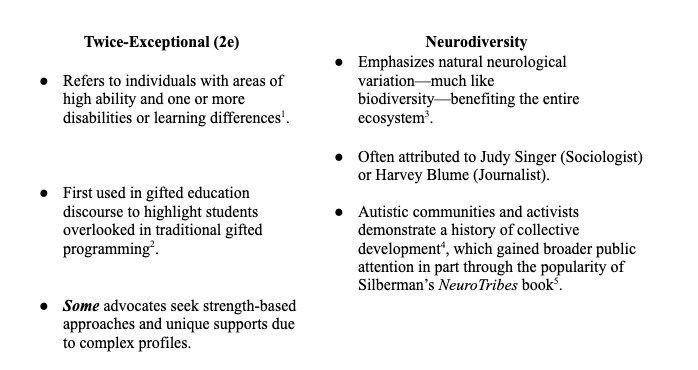
Shared goal: Both 2e and neurodiversity movement advocate for respect, belonging, important contribution and access to supportive conditions —not just diagnostic labels.
Why Labels Alone Don't Solve the Puzzle
A label can open doors to educational services or insurance eligibility, yet it does not explain why a child thrives with one teacher, shuts down in noisy environments, or excels in complex reasoning but struggles with “basic” tasks. Neither giftedness nor disability exists in isolation. They interact with systems and relationships.
A Systems View: Context Changes Performance
Developmental systems research6 shows that human behavior does not come from a child alone, but from the interaction among:
- the self (strengths, challenges, sensory and emotional regulation)
- relationships (teachers, caregivers, peers)
- environment (classroom design, learning demands, sensory input, cultural norms, educational law)
- time (developmental stage, energy level, stress, variability within and between days)
As a result, the same child may appear:
- gifted when supports match their strengths,
- disabled when demands exceed current capacities,
- average when strengths and struggles cancel one another.
These shifting states occur across hours, subjects, environments, and relationships. No single test score or label captures this dynamic complexity.
What Supports Lifelong Success
Rather than asking, “What diagnosis will help fix my child to fit in and behave like gifted children?” consider a broader question: “What conditions does my child need to flourish physically, emotionally, and intellectually across their lifespan?”
Introducing AWARES: Six Drivers for Lifelong Growth
AWARES, available from Supporting Emotional Needs of the Gifted7, offers human-centered, systems-based drivers for thriving—especially for 2e and complex learners.
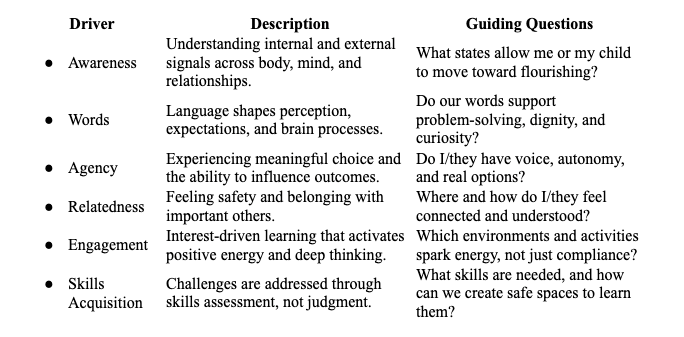
A Systems Insight
None of the six drivers alone leads to thriving. Together, they create a compounding “flywheel effect,” much like deep mathematical mastery built over time.
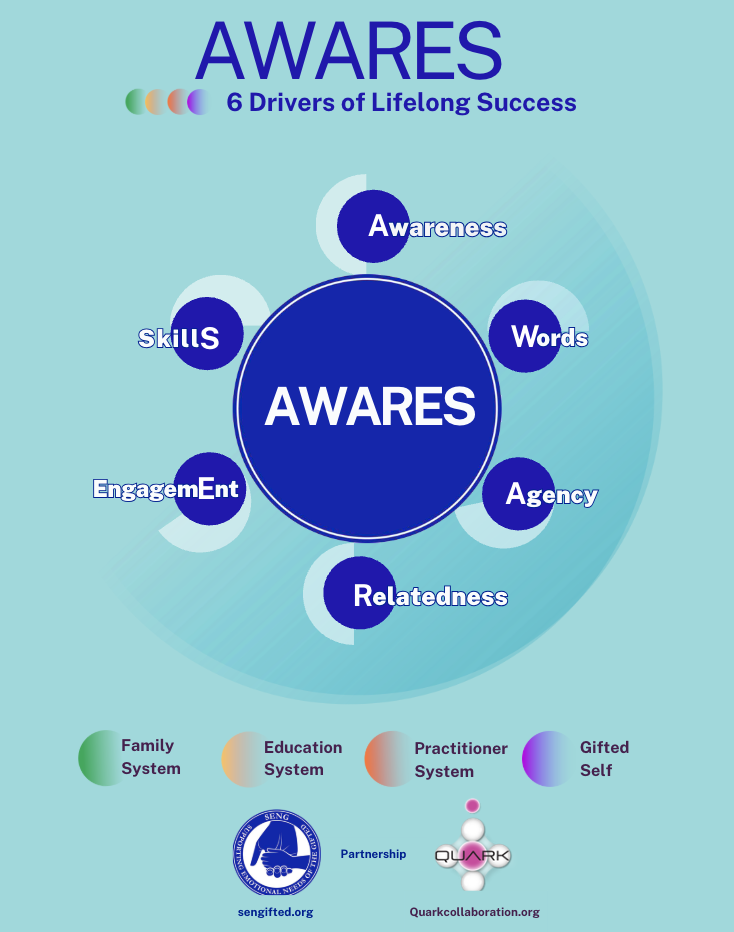
From Labels to Living Systems
The path forward for a child like John does not depend on categorizing him or following a formulaic checklist. It depends on how we understand and respond to the dynamic interaction between his strengths and struggles, both internally and within relationships and environments.
One crucial and often forgotten data point is the presence of safe, stable relationships where a child can share authentically without fear of judgment. In such environments, children learn to understand their own patterns, advocate for needs, and grow skills with dignity rather than shame.
When families, educators, communities, and 2e individuals themselves practice the six AWARES drivers, they can:
- explore interests deeply,
- learn necessary skills safely,
- build resilience for uncertainty,
- and experience lifelong growth, not just school success.
The goal is to understand, assess levers within the system, and seek the smallest tweak/s that result in the largest long term impact to minimize unforeseen consequence/s so the 2e child’s unique profile becomes a source of strength and competitive advantage beyond school.
References
1. Reis, S. M., Baum, S. M., & Burke, E. (2014). An operational definition of twice-exceptional learners: Implications for gifted education. Gifted Child Quarterly, 58(3), 217–230. Follow this link.
2. Gallagher, J. (1988). National priorities for the education of gifted students. Educational Psychologist, 23(1), 3–17.
3. Blume, H. (1997, June 30). Autistics are communicating in cyberspace. The New York Times. Follow this link.
Singer, J. (1998). Odd people in: The birth of community amongst people on the autism spectrum. A personal exploration of a new social movement based on neurological diversity (Master’s thesis, University of Technology Sydney). Follow this link.
4. Botha, M., Chapman, R., Giwa Onaiwu, M., Kapp, S. K., Stannard Ashley, A., & Walker, N. (2024). The neurodiversity concept was developed collectively: An overdue correction on the origins of neurodiversity theory. Autism: The International Journal of Research and Practice, 28(6), 1591–1594. Follow this link.
5. Silberman, S. (2016). NeuroTribes: The legacy of autism and the future of neurodiversity. Avery.
6. Fischer, K. W., & Bidell, T. R. (2006). Dynamic development of action and thought. In W. Damon & R. M. Lerner (Eds.), Handbook of child psychology (6th ed., Vol. 1, pp. 313–399). Wiley.
Fischer, K. W., Stewart, J., & Stein, Z. (2008). Process and skill: Analyzing dynamic structures of growth. In F. Riffert & H.-J. Sander (Eds.), Researching with Whitehead: System and adventure (pp. 327–367). Verlag Karl Alber.
Thelen, E., & Smith, L. B. (1994). A dynamic systems approach to the development of cognition and action. MIT Press.
7. SENG. (n.d.). AWARES definitions: 6 drivers of lifelong success (English). Supporting Emotional Needs of the Gifted. Follow this link.