

Many of my former classmates and friends now have children who are old enough to start school. Since people know that I work at AoPS, I often get questions about AoPS courses and resources. Rather than explaining the same things to one person at a time, I thought I would put everything I know in one place. And since I was writing it anyway, I figured I might as well share it with more parents.
AoPS offers subjects beyond mathematics, including language arts, physics, computer science, and chemistry. This article focuses only on math, where the range of offerings is especially complex across different ages, levels, and formats. AoPS's programs also continue to evolve, so if you are reading this several years after it was written in 2026, some of the information may no longer be current.
Elementary school
AoPS began developing its elementary math curriculum, Beast Academy, around 2012. It took roughly 10 years to complete all five grade levels, with the full series finished in 2022.
In my personal view, Beast Academy represents some of the best work AoPS has ever produced and perhaps the most impressive work in elementary mathematics education more broadly.
I say this because there are plenty of beautifully packaged textbooks with unsophisticated content (unfortunately, many American textbooks fall into this category) and plenty of comprehensive, mathematically deep textbooks that are dry and tedious (many traditional Chinese and Russian textbooks fall into this category). Beast Academy is the only English-language elementary curriculum I know that combines engagement and mathematical depth exceptionally well.
In a sense, Beast Academy blends Eastern and Western approaches to education. It is a rigorous, comprehensive mathematics curriculum, but it is also an ongoing comic-book story with recurring characters, personalities, and plotlines. It is easy to enter, yet its ceiling is very high. From the overall curriculum design to the smallest details, an extraordinary amount of care went into it. It really is the product of ten years of refinement.
You can find plenty of introductions to Beast Academy and its features through internet searches, so I will not spend much time describing the content itself. Instead, I want to focus on how to determine whether Beast Academy is right for a particular child, and how I think families can best use the curriculum and related services.
How to determine whether Beast Academy is right for your child
First, I recommend trying the free online demo.
It gives an illustration of the system and the taste of the material from each level. Library contains the instructional materials, Class contains practice problems, Theater contains instructional videos, the ? buttons provide explanations of the problem type, and clicking the username lets you view learning progress.
One advantage of the demo is that it gives you a sense of which levels your child can begin to understand and reason through, while also letting you see whether your child actually enjoys the system.
After trying the demo, if your child likes it and the difficulty seems appropriate, the second step is to have your child take the placement tests.
These can help you determine which level and which book would be the best starting point.
One important note: please do not help students solve problems or give them hints during the placement test. If a student cannot solve a problem independently, that is useful information. It likely means they would benefit from filling in some gaps and strengthening their foundation before moving on. On the other hand, even if the placement test puts a student slightly below their true level, very little is lost. A student who has already mastered the material can move through those chapters quickly. The downside of placing a student too high is much greater: struggling with materials before a student is ready is among the leading causes of frustration, loss of confidence, and burnout.
How to choose the right Beast Academy format
Beast Academy is available in both print and online formats.
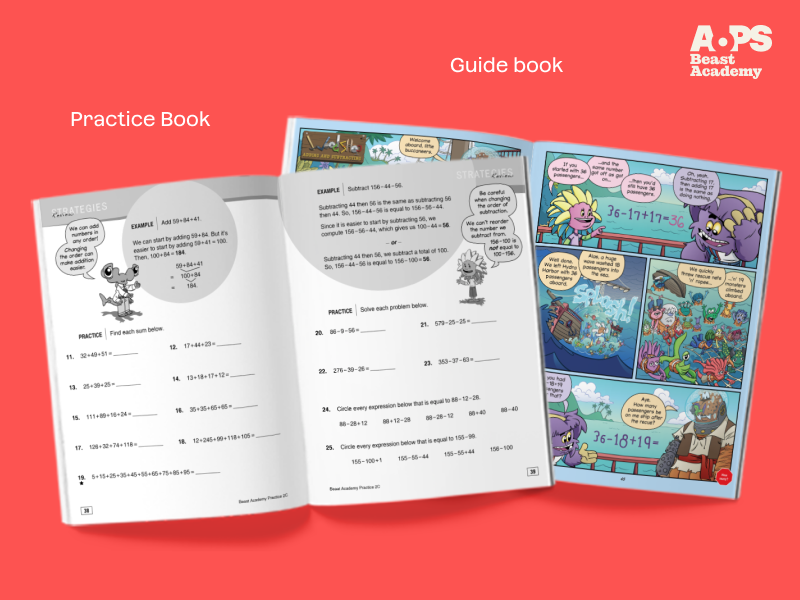
In my opinion, the best option in terms of both cost and learning effectiveness is to purchase the print Guides and Practice books together with the online subscription, i.e., the bundle offered here.
The online version includes problems that are different from those in the printed books, so the two formats are complementary rather than redundant. For a quick learner, either one on its own will usually provide enough practice. However, if a student struggles with a particular chapter, having access to both can provide valuable additional practice and help strengthen their foundation.
The online version includes features that the physical books do not, such as instructional videos, chapter tests, progress reports, and interactive exercises that cannot be replicated in print.
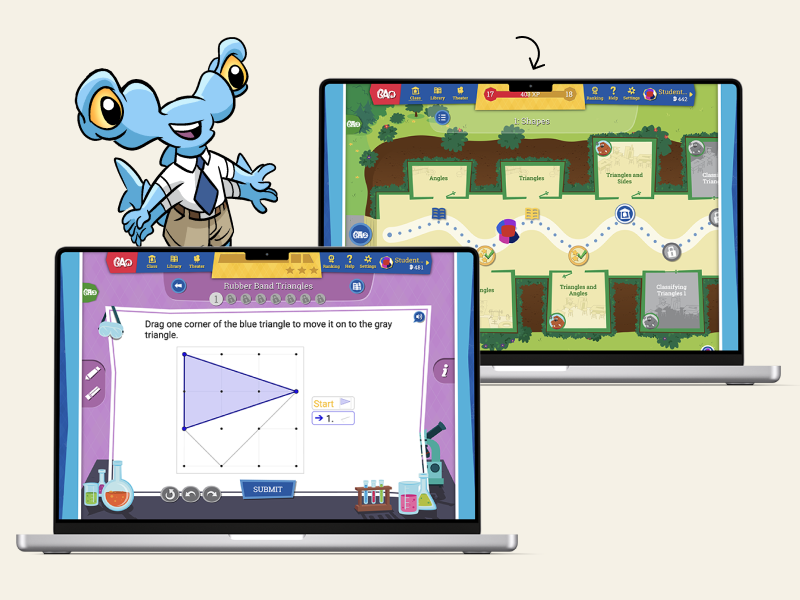
At the same time, physical books have practical advantages of their own. When a child is working through problems or watching videos on a computer, it is often much faster to keep a physical Guide nearby for reference than to navigate back and forth through the online text. It is also easier to bookmark pages, write notes, and annotate directly in a printed book.
There is also a more subtle benefit. Sitting down with a physical textbook creates a different atmosphere from simply sitting in front of a computer. It can serve as a psychological cue: “Now it’s time to study.” Over the long run, I think that small distinctions can help children develop stronger and more deliberate study habits.
Lastly, Beast Academy offers a spinoff puzzle series, available both online and in print. Don’t mistake these for entry-level warmups: they are among the most challenging materials ever created for Beast Academy, designed by world puzzle champion Palmer Mebane. I recommend that students tackle the puzzle books only after they have mastered the core practice problems. That said, in both creativity and difficulty, the puzzles are truly remarkable and often become one of the most memorable parts of the learning journey for exceptionally talented students.
How to decide whether your child needs a Beast Academy teacher
The three most important external influences on learning are teachers or mentors, peers, and learning materials.
If your child can happily watch the instructional videos and work through the exercises independently, while maintaining reasonable efficiency, accuracy, and interest, then in a sense your child is serving as both their own teacher and their own study buddy. If you are fortunate enough to have a child like this, then independent study can work perfectly fine.
Some parents also have strong mathematics backgrounds themselves, know something about teaching, and have the time and patience to work with their children. Beast Academy provides a great deal of support for these families as well. For example, practice books offer hints to challenging problems, and the online parent portal includes detailed solutions to all exercises. Parents in this situation can often guide their students through Beast Academy quite successfully at home.
For many families, however, children are not ready to study entirely on their own, and parents do not have the time to provide substantial instruction. In that situation, you might consider courses through AoPS Academy. As of 2026, AoPS operates physical academies in 12 U.S. states.
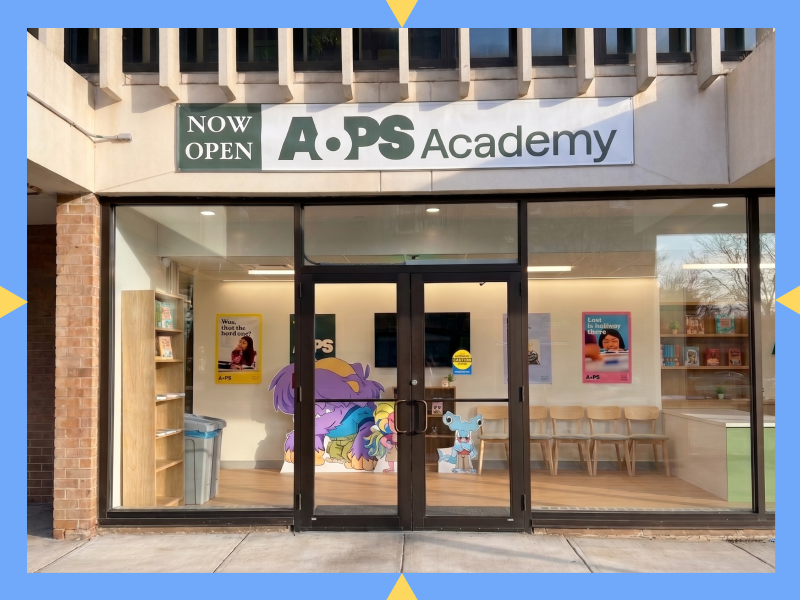
If you do not live near one of these campuses, you can enroll in the online video classes.
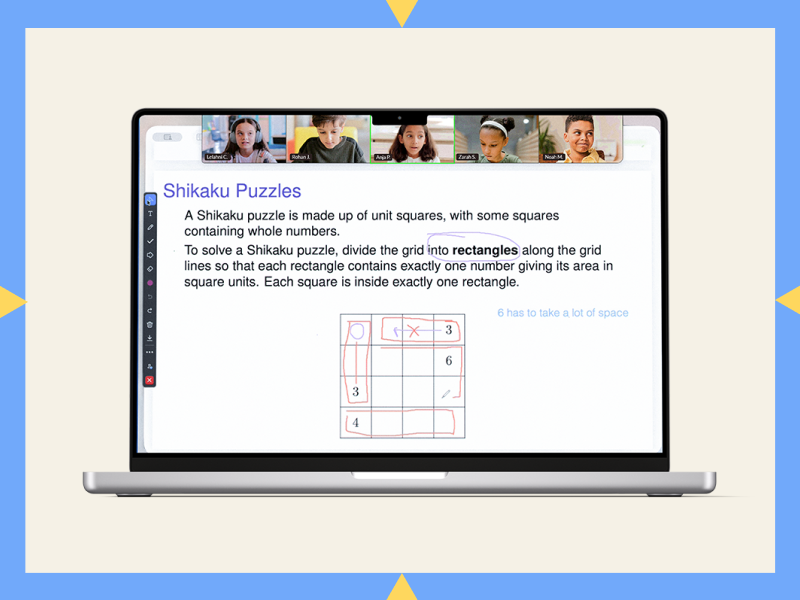
Each in-person or online video class generally has about 10–16 students.
AoPS is fortunate to attract some of the best math teachers in the country. For many of them, part of the appeal is the opportunity to teach unusually motivated and mathematically talented students, an experience that can be just as rewarding for the teacher as it is for the student. You can find teacher bios on the class schedule page of each AoPS Academy location.
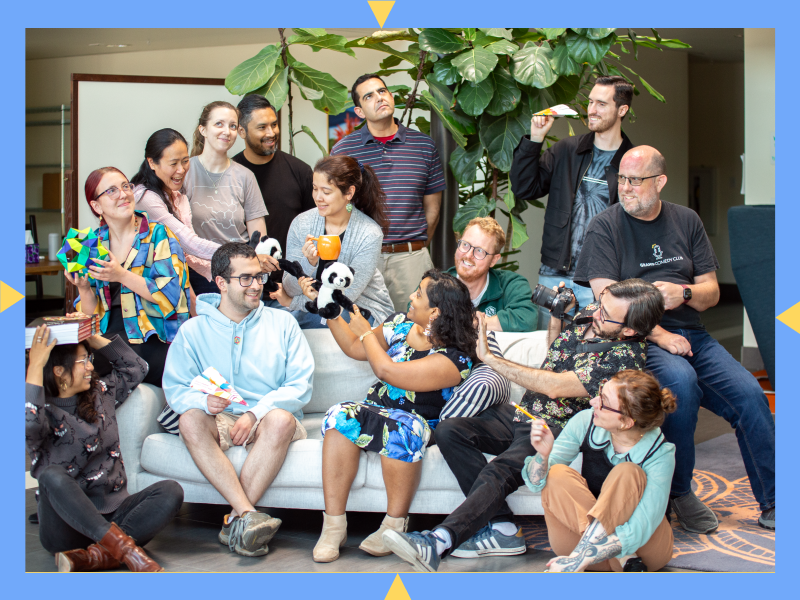
Whether online or in person, AoPS classes are not simply a matter of presenting students with a list of problems and asking them to solve them. Classes are highly interactive, with role-playing, small-group activities, puzzle competitions, and more. The goal is to create an environment where students are deeply engaged in mathematical thinking while enjoying the experience, so much so that they may hardly notice how hard they are working.
It is worth noting that during the school year, AoPS Academy elementary math courses use Beast Academy as their primary curriculum and homework system. These courses run for 36 weeks and are intended to provide systematic coverage of a full year of mathematics.
They are different from another type of classes offered at AoPS Academy, summer camps, which are much more compressed: 30 class hours taught over two to four weeks. Summer camps do not use Beast Academy books. Instead they select interesting topics from the previous school year, explore connections among ideas and surprising applications, deepen students' understanding of those concepts, and prepare them for the next grade.
In other words, summer camps are a great way to explore interesting topics and cool problem-solving strategies. But to build a strong mathematical foundation systematically and prepare for more advanced study, students generally need the continuity and depth of a year-long course.
Middle and high school
One of AoPS's major strengths at the middle- and high-school level is the sheer amount of high-quality free material available.
If a child develops strong independent learning habits during elementary school, then by middle school it is possible to buy just a few books and combine them with AoPS's free resources to reach a very high level mathematically.
AoPS's middle- and high-school textbook system is best viewed as a chart, which you can find at https://artofproblemsolving.com/store/recommendations.
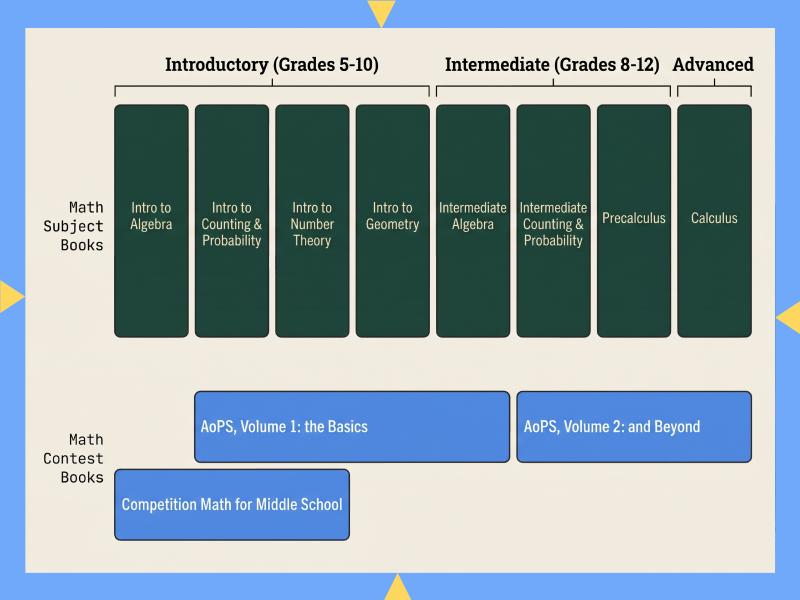
The upper tier there is the subject books. An advanced student might study AoPS's Prealgebra curriculum in sixth grade, Introduction to Algebra in seventh grade, and continue from there. A student with a more typical foundation could begin in seventh grade and still be perfectly fine. In fact, students should have developed more than enough mathematical strength to score in the top 1% on the SAT and 20+ on AMC 8 by the time they master our core curriculum up to Introduction to Geometry. Therefore, there is really no need for parents to rush their children through these courses.
The intermediate and advanced series, from Intermediate Algebra through Calculus, are designed for students who may eventually pursue mathematics or other math-intensive fields. These books go well beyond the scope and depth typically found in standard high school and AP courses.*
The lower tier on that page contains books specifically aimed at math competitions.
- Competition Math for Middle School is roughly at the AMC 8/MATHCOUNTS level.
- Volume 1 is harder, roughly spanning AMC 8 through AMC 10.
- Volume 2 is around AMC 12/AIME level.
The audience for books beyond this level is very small, so AoPS has not published separate textbooks for the most advanced Olympiad training. Instead, it offers course materials such as MathWOOT (Worldwide Online Olympiad Training), primarily designed by five-time International Mathematical Olympiad (IMO) gold medalist Alex Song.

You may notice something interesting here. Although AoPS has an extraordinary record in the international math competition world — more than 100 IMO gold medalists have studied through AoPS — it has published only three books specifically devoted to competition math, all of which were early works by AoPS founder Richard Rusczyk and Beast Academy lead author Jason Batterson.
This reflects an evolution in AoPS's educational philosophy: the most effective way to become stronger at math competition is not to learn math concepts first and then add a separate competition course afterward. It is to learn each mathematical idea deeply and thoroughly the first time around.
That is why the subject books contain not only explanations of foundational mathematical concepts but also large numbers of problems from competitions such as AMC, MATHCOUNTS, ARML, and AIME, used as examples and exercises. To learn more about these contests, view our math competition guide.
As a result, these books can both entirely replace a traditional school mathematics curriculum and develop students far enough to reach the level required for USAMO qualification.
Whether or not a child is especially interested in math competitions, I think the strongest general path is to begin Prealgebra around ages 11–13, when the student is ready, and then progress through the Core Curriculum sequence through Calculus. The three competition-focused books can be treated as electives, added along the way depending on the student's interests, goals, and needs.
How to choose the right AoPS middle- or high-school level
You can find all AoPS books on this page.
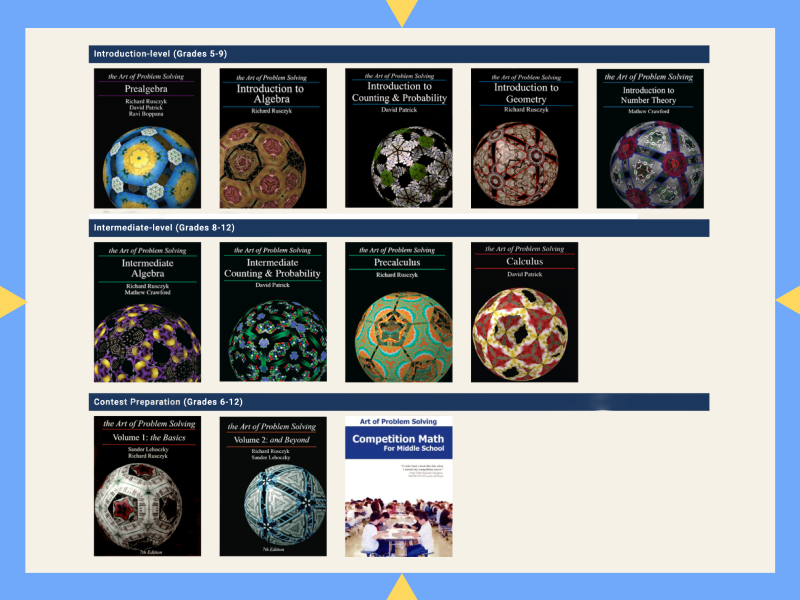
For each book, the "Are you ready?" and "Do you need this?" assessments can help you determine whether the difficulty is appropriate. Each book's table of contents and publicly available sample chapters, or Excerpts, can also help you determine whether its content matches what you are looking for.
Once you have chosen a book, you can purchase either the printed or online version.
The printed books are large and fairly heavy, more like dictionaries than typical textbooks. So they are not especially convenient to carry around. That said, print has its advantages: you can write and draw directly in the book, you do not need a computer or internet connection, and once you are finished, you can often resell the books for 60–70% of the original price.
The online books, on the other hand, are very easy to navigate. You can reveal solutions to individual exercises as needed, and I have found the search function especially useful for quickly locating a particular concept or topic.
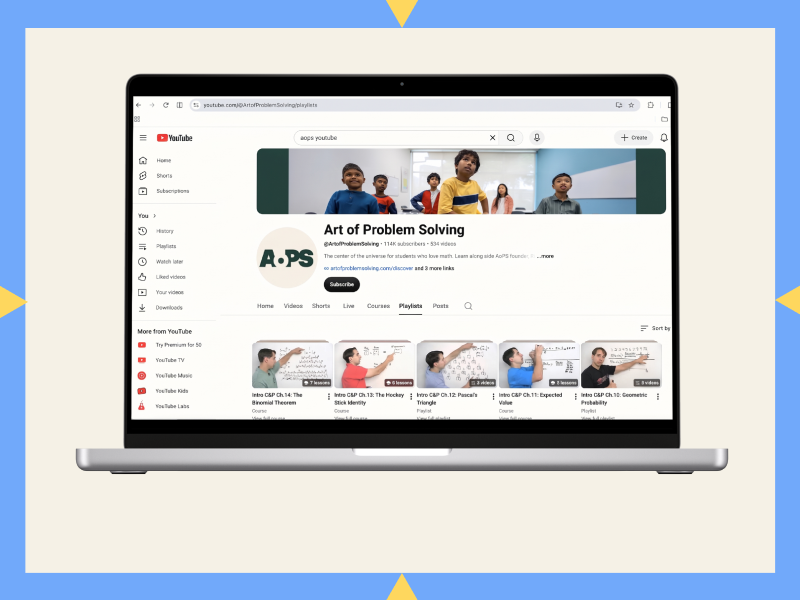
AoPS founder Richard Rusczyk has also created hundreds of instructional videos to accompany these books, available for free at aops.com/videos. In the online books, the relevant videos are embedded directly into the corresponding chapters for extra convenience.
Create a free Alcumus account for practice
Alcumus is a comprehensive, systematic, and completely free problem bank.
All you need is an email address to create an account.
Alcumus contains tens of thousands of problems covering nearly all major middle- and high-school mathematics topics. It also includes problems from nearly all past AMC and MATHCOUNTS competitions.
Its curriculum begins with Prealgebra, and extends through Precalculus, across seven courses. Each course is divided into roughly 30–60 topics, and every topic has its own progress bar.
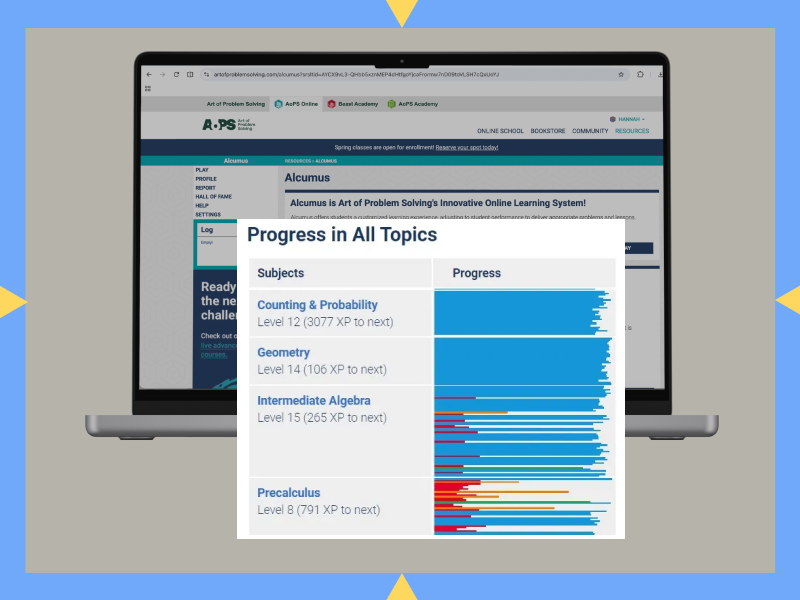
You can think of Alcumus as the practice system that accompanies the AoPS Core Curriculum. For example, if your child is studying Prealgebra, they can use Alcumus alongside the book to practice the corresponding topics and track their progress at a glance.
Alcumus is adaptive: it adjusts the difficulty of the problems it presents based on a student's previous performance, which helps reduce unnecessary repetitive practice. That said, I have found that it will occasionally serve up a problem that is surprisingly difficult and pushes the boundary a little too far. It is worth preparing students for that possibility. If they have already spent a substantial amount of time thinking about a problem and are still stuck, it is perfectly fine to skip it and move on.
Use the AoPS forums to discuss mathematics
Many students and parents first discover AoPS because it hosts one of the world's most comprehensive free archives of math competition problems.
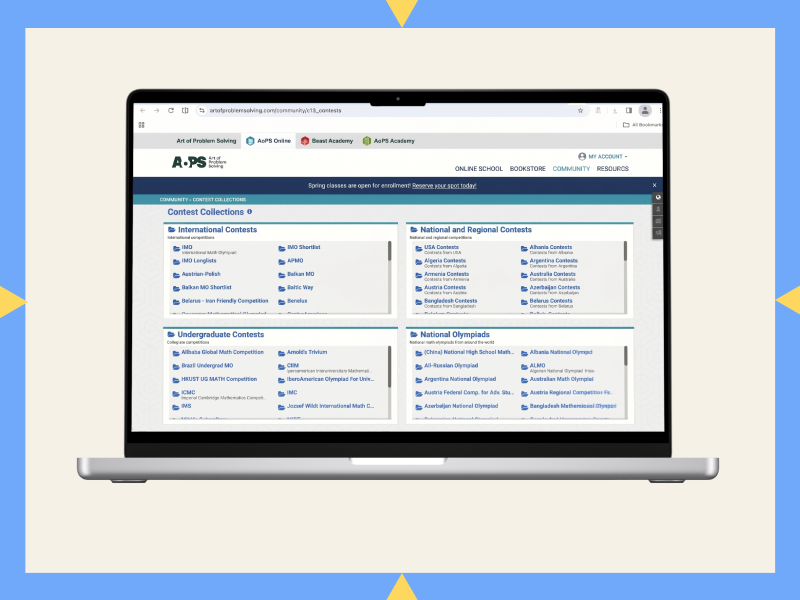
The archive includes competitions from dozens of countries, including the United States, China, Russia, Japan, Germany, France, Hungary, Iran, South Korea, and many others. All publicly posted competition materials there are used with permission from the relevant organizations.
Past AMC exams can be found under National and Regional Contests → USA Contests. The collection ranges from the relatively accessible AMC 8, through the more difficult AMC 10/12 and AIME, all the way to extremely challenging competitions such as the IMO, TST, and Putnam.
But the contest archive is really just one section of the broader AoPS Community.
The forum still embodies the original purpose for which AoPS was created: to build a home for students who love learning mathematics and teachers who love teaching it.
There are no secret tricks or proprietary techniques hidden behind closed doors. The discussions are public. Students and teachers pose problems for one another and work on them together.
Due to the unique audience of the AoPS community, MIT has partnered with AoPS on a project called CrowdMath, in which open mathematics problems are posted on the AoPS forums so that MIT researchers and members of the AoPS mathematical community can discuss them together. The project has now been running for a decade.
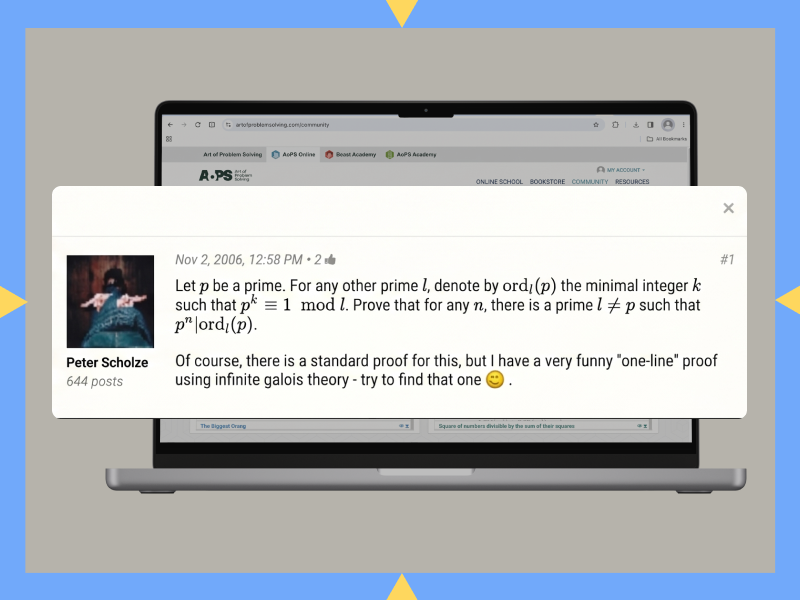
Another fun fact: 2018 Fields Medalist Peter Scholze was quite active on the AoPS forums when he was a student. Search for his name and you can still find hundreds of his old comments discussing different mathematics problems.
I strongly recommend that parents encourage their children to participate in the AoPS forums and meet peers who share their interests.
At MIT freshman events, students sometimes exchange AoPS usernames and realize that they had already known one another through the AoPS forums years before ever meeting in person. For a student, discovering that an old online math friend has suddenly become a real-life classmate can be one of those delightful experiences they remember for the rest of their lives.
Choosing an AoPS Academy format
AoPS offers four formats for instruction: Online (text-and-diagram), Self-Paced, Online (video), and In-Person.
The text-and-diagram online live classes are the original class format offered by AoPS since 2004.
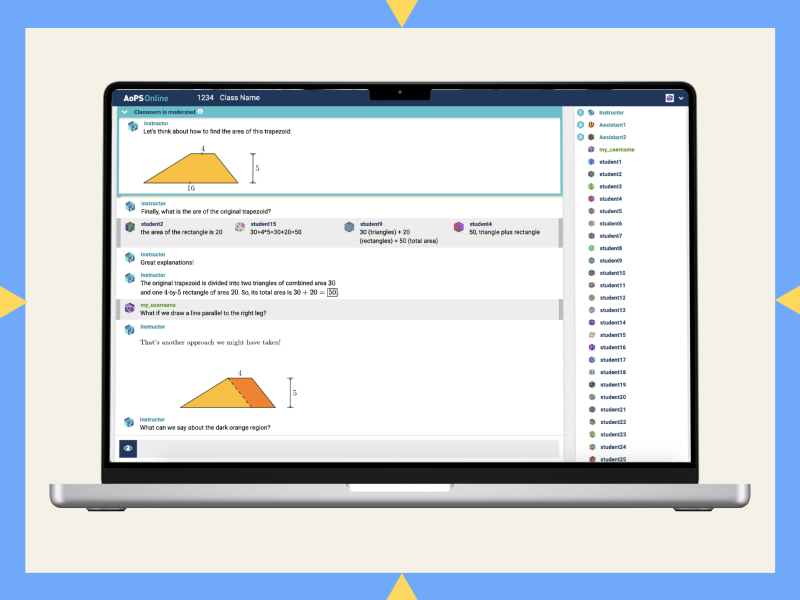
These classes use a chat room format, with no audio or video.
I was surprised when I first heard about this format since I could not imagine how a class could work this way. But after experiencing it, I realized that the lack of distractions can make the format remarkably efficient.
It also has several other advantages. For example, if a student needs to step away to take a water break, they can simply scroll back through what they missed and immediately catch up with the class. The complete transcript remains available after each lesson, making it very easy to search for explanations of particular concepts or problems.
In addition, the system uses students' participation patterns to provide teachers and teaching assistants with real-time information about how individual students are doing, allowing teaching assistants to reach out promptly to students who appear to be struggling.
Beginning in 2019, we also started offering Self-Paced courses to serve students who want to go faster or slower than our live classes. Today, Self-Paced options are available for Math 6: Prealgebra, Math 7: Introduction to Algebra, Math 7.1: Introduction to Counting & Probability, and Math 8: Introduction to Geometry.
The full catalog ranges from relatively accessible courses such as Prealgebra and AMC 8, all the way through Calculus, Group Theory, and MathWOOT, AoPS's online Mathematical Olympiad training program, which includes members of the U.S. IMO team each year.
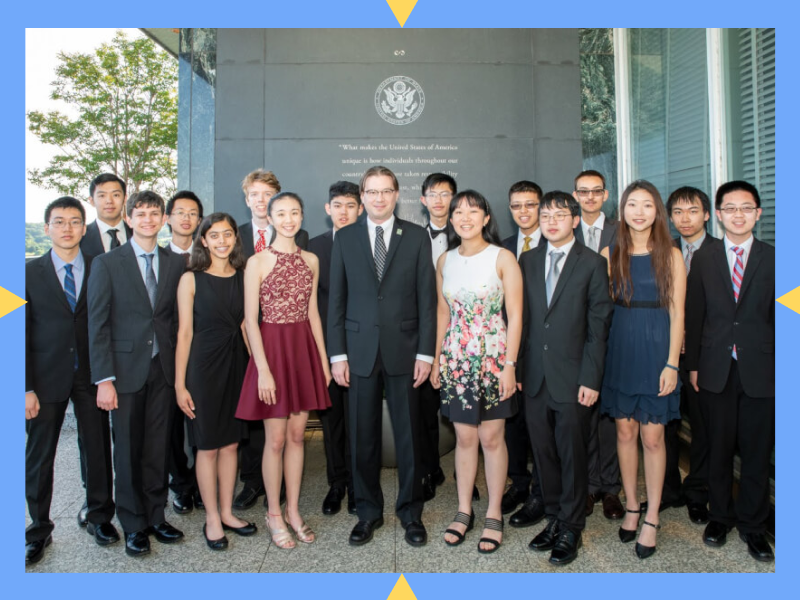
The other two formats, Online (video) and In-Person classes, have already been discussed in the section on elementary mathematics. These two formats have small class sizes (10–16 students per class) and correspondingly higher tuition.
I understand that the breadth of our offerings, along with the many different class formats, can feel overwhelming. In fact, outside consultants have sometimes suggested that we simplify the portfolio by cutting courses or formats to make the purchasing decision easier. We have chosen not to do that, because students learn in different ways, and we want to offer formats that can work well for different kinds of learners. Having to make choices like this, in my view, is why a company's mission exists in the first place.
That said, parents do not have to navigate all of these options on their own. AoPS offers free consultations online and at all of our in-person campuses to help families find the option that best fits their student.
A few final thoughts for parents
This has been a rather long article, so thank you for staying with me to the end. I’d like to close with a few personal thoughts for parents, particularly about several misconceptions I have encountered repeatedly over the years.
Misconception 1: Setting learning goals that are too short-term
Many parents have asked me what course their child should take in order to achieve a strong result on a particular exam or competition a few months, or perhaps half a year, from now.
My answer is usually: probably no course will work especially well.
In some countries, a single exam can represent an enormously consequential opportunity, particularly for families with limited economic resources, and can genuinely change the trajectory of a young person's life. There is no exam in the United States with quite the same significance. Students usually have multiple opportunities to take exams such as the SAT, ACT, or AMC, and a particularly good or bad result on any one of them is rarely decisive on its own.
Therefore, I think the main goal should be to motivate a child to learn, rather than to make a particular score the goal itself.
If a specific score on a particular test is needed, I encourage families to think at least two years ahead. Two years gives a student enough time not simply to prepare for a test, but to genuinely deepen their understanding, strengthen their problem solving ability, and mature intellectually along the way.
And even if they do not ultimately reach the original goal, the effort can still have been enormously worthwhile. Ideally, they will have learned enough to appreciate the beauty of the subject and made enough visible progress to recognize how much they have grown. When that happens, a temporary disappointment is much less likely to cause them to give up or derail their longer-term development.
Misconception 2: Underestimating interpersonal and collaborative skills
Most exams measure how well an individual student can solve problems on their own. They tell us very little about whether that student can communicate, collaborate, listen to others, or contribute effectively to a team.
This is one of the inherent limitations of standardized tests and many mathematics competitions. No matter how strong someone's technical ability is, it is difficult to build a successful career if they can't work effectively with other people.
One benefit of AoPS classes that is often underestimated is the opportunity to learn alongside strong students with very different backgrounds, personalities, and perspectives. That experience matters.
Learning to work comfortably and collaboratively with talented people who think differently from you is an important part of preparing for life at leading universities, companies, research institutions, and many other professional environments. I suspect many parents who have worked in such environments will know exactly what I mean.
Misconception 3:“You can't let your child lose at the starting line”
If your child is only four or five years old and you put Beast Academy in front of them, but they simply are not interested, worrying more or spending more money on classes is unlikely to help very much. It may even make things worse.
Often, the best solution is simply to wait a year or two and try again. There is no need to rush.
You will inevitably hear stories about what “other people's genius children” can already do. Leaving aside how reliable those stories may be, even if they are completely true, it usually does not matter very much that one young child can recognize a few more words or solve a few more math problems earlier than another.
Parents of toddlers sometimes compare which child learned to walk first. Eventually, almost everyone learns to walk, and years later nobody can tell who started three months earlier.
Unfortunately, voices from educators who genuinely understand and care about education are often harder to hear because responsible advice is less attention-grabbing than messages that amplify anxiety and promise quick solutions. However, if you are able to ignore all the noise, you will see that the things which matter most are much less eye-catching:
- helping children develop good learning habits,
- protecting their curiosity,
- teaching them how to persist through difficulty, and
- helping them grow into thoughtful, capable, well-rounded people with a healthy attitude toward learning and life.
Those are the principles I hope all of us, as parents, can keep in mind.
* While "test preparation" is not the main focus, AoPS Calculus is approved by the College Board as an AP® Calculus BC class for students in grades 9–12 and goes beyond a standard Calculus BC curriculum.
AP® is a trademark registered by the College Board, which is not affiliated with, and does not endorse, this website.