


A common question we are asked is:
“Can AoPS help students perform well on standardized tests?”
And our answer is yes, but we don’t believe that’s the right question. We teach problem solving, which isn’t specific to a particular outcome or achievement.
Given the question “Can AoPS help students perform well in ________?”, we can fill in the blank with any number of academic or professional endeavors, including math & science contests, research projects & independent reading, engineering & coding challenges, and so on, and our answer is still confidently yes.
One of our core beliefs is that problem solving is a universally applicable skill that can be taught, and a strong math curriculum is the most effective vehicle to teach this skill. We can't predict what problems our students will face in the future, but we can teach students how to think strategically about hard new problems, regardless of their nature.
While we are obviously strong advocates for a problem-based curriculum, what backs up these claims? While AoPS does not track our students' high school standardized test scores, we do have evidence that our problem-solving curriculum is working as intended. We can point to:
- The WestEd (2022) and The Utah Education Policy Center (UEPC) studies (2025), which demonstrate the efficacy of Beast Academy - AoPS’s elementary curriculum - in increasing student math performance, as measured by standardized tests like the MAP and Acadience Math assessments.
- The fact that during the pandemic when the MAA AMC was taken online, 20% of students taking the AMC 10/12 were in AoPS classes, while 60% of the AMC 10/12 Honor Roll were in AoPS classes.
- How 85% of the 300 students qualified for USA Math Olympiad, the most advanced high school math competition in the country, were AoPS students. And in the last 12 years, the USA International Math Olympiad team members have won 71 medals and have taken over 400 AoPS Online courses.
- The AoPS LinkedIn Alumni tab, with which we can see where the problem solvers we helped train are ending up.
- Thousands of testimonials and anecdotes from talking first-hand with the families of our students.
So the question we prefer to answer is:
“Why is a problem-solving education important?”
And our answer is that it trains students to think deeply and flexibly about the hard problems of today, and prepares them to adapt for the hard problems of tomorrow.
“Greater usage was positively associated with higher end-of-year math scores, even after controlling for prior achievement and student demographics. Each usage metric—minutes spent, units completed, days of engagement, and fidelity-level usage—predicted better performance, while months with zero usage predicted lower scores.” - UEPC Finding
“The evaluation team found that Beast Academy had statistically significant, positive effects on math achievement. Specifically, students who had a record of Beast Academy use in both years of the intervention period scored on average 8.78 scale points higher on the spring 2021 MAP assessment in math than did their matched comparison group peers who had no exposure to Beast Academy during that period” - WestEd Finding
Anecdotes from History
Scientists and mathematicians occasionally reference “The Unreasonable Effectiveness of Mathematics in the Natural Sciences” - a phrase coined by physicist Eugene Wigner in the mid 20th century. Similarly, we can talk about the unreasonable effectiveness of a problem-solving education in opening doors for students, regardless of how technology or standardized measures of academic performance change. We believe that a student who knows problem solving has a shorter path to success in academic and professional feats than their peers who don’t know problem solving.
The same modes-of-thought that were involved in the past’s brilliant solutions are still being used by today’s great thinkers. "Working backwards," "thinking by analogy," "solving a similar but simpler problem," and so on are still powerful tactics for deconstructing complex tasks across an array of disciplines. However, the precise subject matter of problems, and what facts and algorithms are considered valuable to know, is constantly in flux.
Three Solutions, One Year
For instance, in 1993 a few great things happened: the pdf file format was released by Adobe Systems, CERN put the World Wide Web software into public domain, and the Art of Problem Solving, Volume 1: the Basics was published.
Each of these three items was a solution to a problem of the era: developing a font- and formatting-preserving way to share content across different operating systems, creating a globally connected digital communication network, and providing pre-collegiate students a resource through which they could train to become great thinkers.
The development of the pdf file format was a shift away from PostScript, and the launch of the World Wide Web and its HTTP/HTML protocol was a shift away from the Gopher communication protocol. While it was not uncommon for computer science students in the 1980s and 90s to be taught PostScript, or to work with Gopher clients, today it’s mostly retro-computing hobbyists who learn this content.
The past and present of AoPS Volume 1 is different. It didn’t necessarily supplant anything. Instead, it created a pathway for more middle- and high school students to learn deeply, regardless of where they live, what school they go to, or what teacher they have. Today, just as 30 years ago, students across the country are using AoPS Volume 1 to learn something more than just content.
When Computation Got Out of the Way
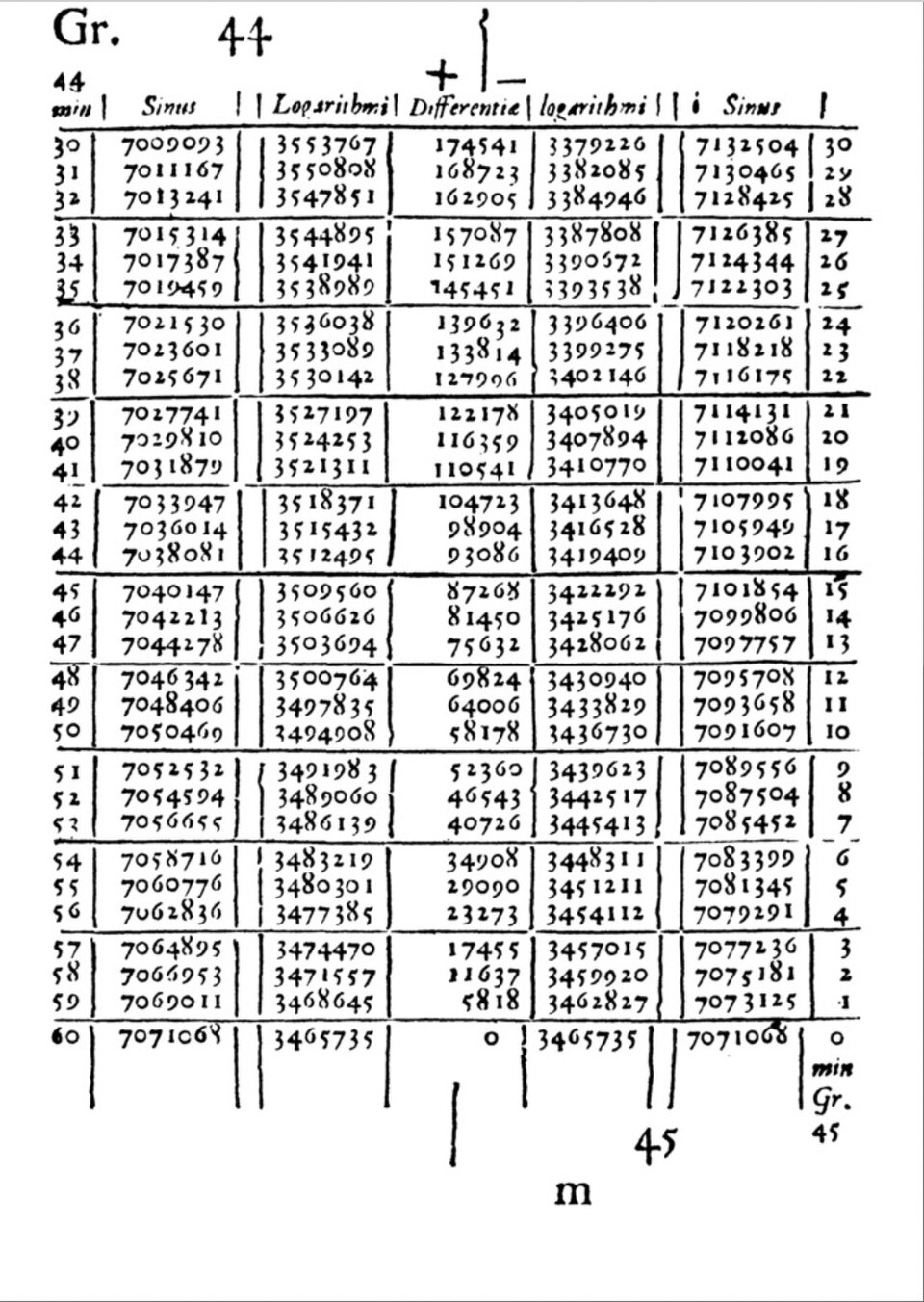
Long before pdfs or the World Wide Web, a single publication reshaped which mathematical skills were worth having. In 1614, John Napier published Mirifici Logarithmorum Canonis Descriptio. This book included the famous Napierian logarithm tables - the result of 10 million manual computations completed over 20 years. The publication of Napier’s tables was a massive moment in the history of science. Prior to the publication, individual astronomers were on the hook themselves for performing tedious calculations, and one’s fluency with such computations was a valued skill in academia. After Napier’s log tables were published, mathematicians and astronomers could spend less time doing rote computations, and more time pushing the theoretical boundaries of their disciplines. In fact, Napier’s log tables opened the doors for figures like Johannes Kepler and Isaac Newton to advance our understanding of planetary motion and gravity. Napier’s log tables incurred a shift in how valuable specific mathematical skills were for doing scientific work.
The same pattern repeated itself centuries later. In the mid 20th century NASA employed mathematicians to manually model and perform complex trajectory and orbital mechanics calculations. “Human calculators” like Katherine Johnson were critical for the success of many of NASA’s missions, and the computational prowess of these mathematicians was an extremely valuable skill.
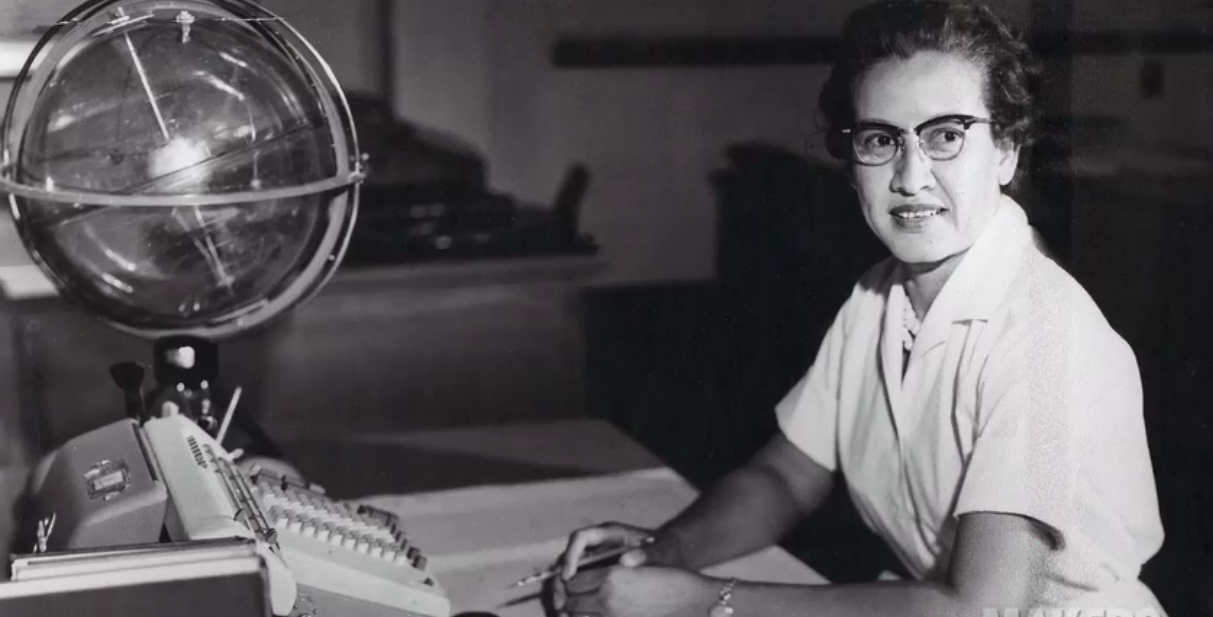
With the rise of modern computing, manual computations could be delegated to computer algebra systems like R and Maple. For NASA mathematicians, more time could now be spent pushing the envelope on more grandiose aspects of their work. That meant professionals did not need to demonstrate computational fluency in the same way as before, and their ability to engage in deeper problem solving became a larger portion of their day-to-day work.
“Though trajectory computations are now done using modern day computers, humans are still required to do trajectory analysis and mission planning. Every mission is different, and with new techniques comes new simulation equations that must be developed and computations that must be performed during actual mission events to ensure success."1
The Pattern Reaches the Classroom
This same dynamic is not confined to labs and space missions; it eventually reaches the classroom too. As technology advances, new professional domains open up, or organizational beliefs about standardized testing change, educators will question which topics or manipulative skills are important to teach students explicitly. It is these questions that often incur change to the format or substance of standardized testing. For example, due in part to advocacy by the National Council of Teachers of Mathematics, in 1994 the College Board made changes to the SAT math portion and allowed students to use calculators for the first time in the test’s history. In turn, the content of the math test also changed: problems included more “real-looking” data (aka less simple numbers), and more problems were included about data analysis, probability, and coordinate geometry. These changes occurred a year after AoPS Volume 1 was published, but the state or format of the SAT did not impact AoPS’s approach to teaching math.
As math educators Fishback and Schlicker noted in an article discussing the impact of technology on education:
“Technology has also opened up new avenues by which students can approach mathematics problems. Technology can create opportunities for students to devote more time to mastering concepts or ideas as opposed to simply building mechanical skills” 2
Similarly, in 2016, the SAT underwent another major revision and aligned its assessed content with Common Core Standards. In theory, that means if a student is enrolled in a school or program that has comprehensive common core standards coverage, then the student is receiving content training for college entrance exams. This change likewise did not cause AoPS to adjust our approach or beliefs about the best way to train students. Our modus operandi has always been to build a curriculum that trains highly motivated students who are willing to face hard problems to be expert problem solvers, and we are confident that doing so will help students be successful on standardized tests, regardless of how such tests evolve.
The Next Disruption
We may be actively witnessing another installment of technological disruptions to what content knowledge is valued. Just in the past few weeks, three relatively long-standing open math problems were solved with AI assistance: the Unit Distance conjecture, the Jacobian conjecture, and the Dinitz-Garg-Goemans conjecture. Considering FrontierMath’s AI benchmarks over the past year, we may have only scratched the surface of what AI tools can do in academic research. At the same time, colleges and universities are already starting to adapt their admissions and curriculum strategy to account for the existence of AI. UChicago Law School’s new strategy includes banning electronic devices from first-year classes, with some limited exceptions 3. And Caltech now uses VIVA to conduct oral exams of students who have submitted research projects as part of their college application. So, we are already seeing structural changes to college admissions processes.
Questions about the academic integrity of online tests in the age of AI, grade inflation, some colleges reinstating the requirement that students submit SAT/ACT scores for admission, and big players like the Carnegie Foundation for the Advancement of Teaching asking "Will AI Make Standardized Tests Obsolete?" suggest we may see downstream implications for the precise nature and structure of standardized tests in the not-so-far future.
But paradigm shifts in education have never been an issue for good problem-solving curricula. “How to think” is more timeless than any specific content knowledge, so even if the standards, content, or problems change, our students are prepared.
“We do know, however, that some colleges pay attention to high AMC scores, and the data in our paper Ellison and Swanson (2009) indicate that a very high score on the AMC is an even stronger predictor of future success on the math SAT than is a previous perfect score on the SAT.” - Ellison and Swanson (2009)
Napier's tables, NASA's human computers, and AoPS Volume 1 all point to the same lesson: the specific skills a given moment rewards can shift fast, but the capacity to reason through a hard, unfamiliar problem does not expire. Standardized tests will keep evolving to reflect whatever content is considered worth knowing at the time. Our approach isn't built in opposition to that. It's built for something broader: training students to think clearly when the problem in front of them is new. That's what stays with a student long after any single test is behind them.
1Anthony Greicius - NASA Web Developer
2The Impact of Technology on Mathematics Education, by Paul Fishback and Steven Schlicker
3UChicago Law Unveils New AI Strategy, by Nadia Alfadel Coloma